How Much Are Credit Card Processing Fees? Real Numbers From the Merchant Statements We Review
See realistic credit card processing fee ranges, the three fee layers, and how pricing models affect the true all-in cost.

Credit card processing fees cost merchants 1.5% to 3.5% per transaction, with most businesses paying an effective rate near 2.5% to 3% once all fees are included. On the statements we audit, the true all-in rate is almost always higher than the rate the merchant thinks they pay.
What Are the 3 Components of Every Processing Fee?
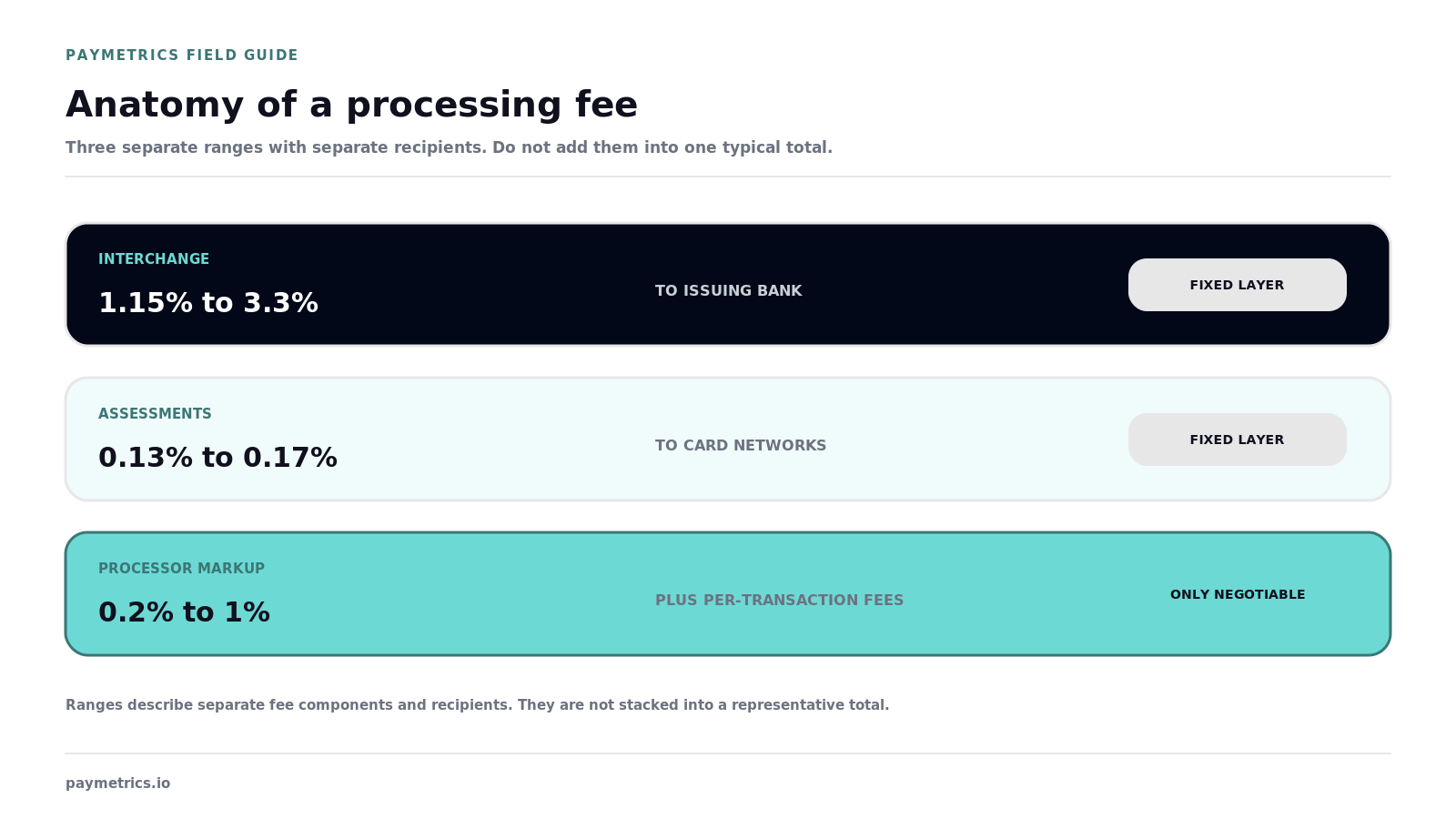
Every processing fee contains 3 components like interchange, assessments, and processor markup:
- Interchange: 1.15% to 3.3% paid to the card-issuing bank, set by the networks
- Assessments: 0.13% to 0.17% paid to Visa, Mastercard, Discover, or Amex
- Processor markup: 0.2% to 1% plus per-transaction fees kept by the processor
Only the markup is negotiable. Interchange and assessments are fixed costs that every processor in the industry pays identically.
What Do Typical Businesses Pay by Transaction Type?
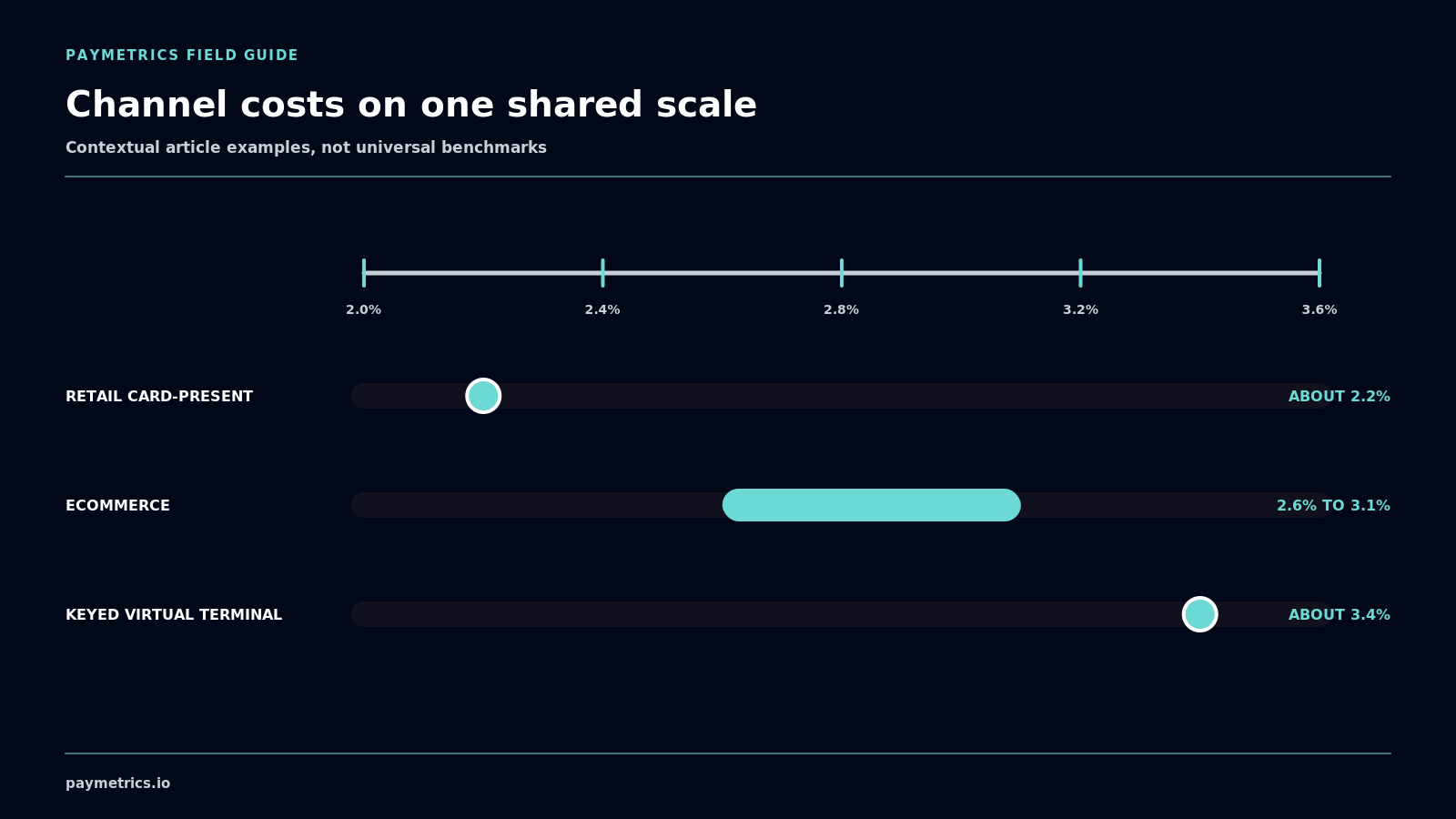
Card-present businesses pay the least and keyed transactions pay the most. A retail store swiping cards through a POS system might average 2.2%, while a contractor keying cards into a virtual terminal can average 3.4% on identical volume.
Ecommerce sits in between at roughly 2.6% to 3.1%, because online transactions through a payment gateway carry card-not-present interchange rates plus gateway fees.
What Hidden Fees Inflate the Monthly Bill?
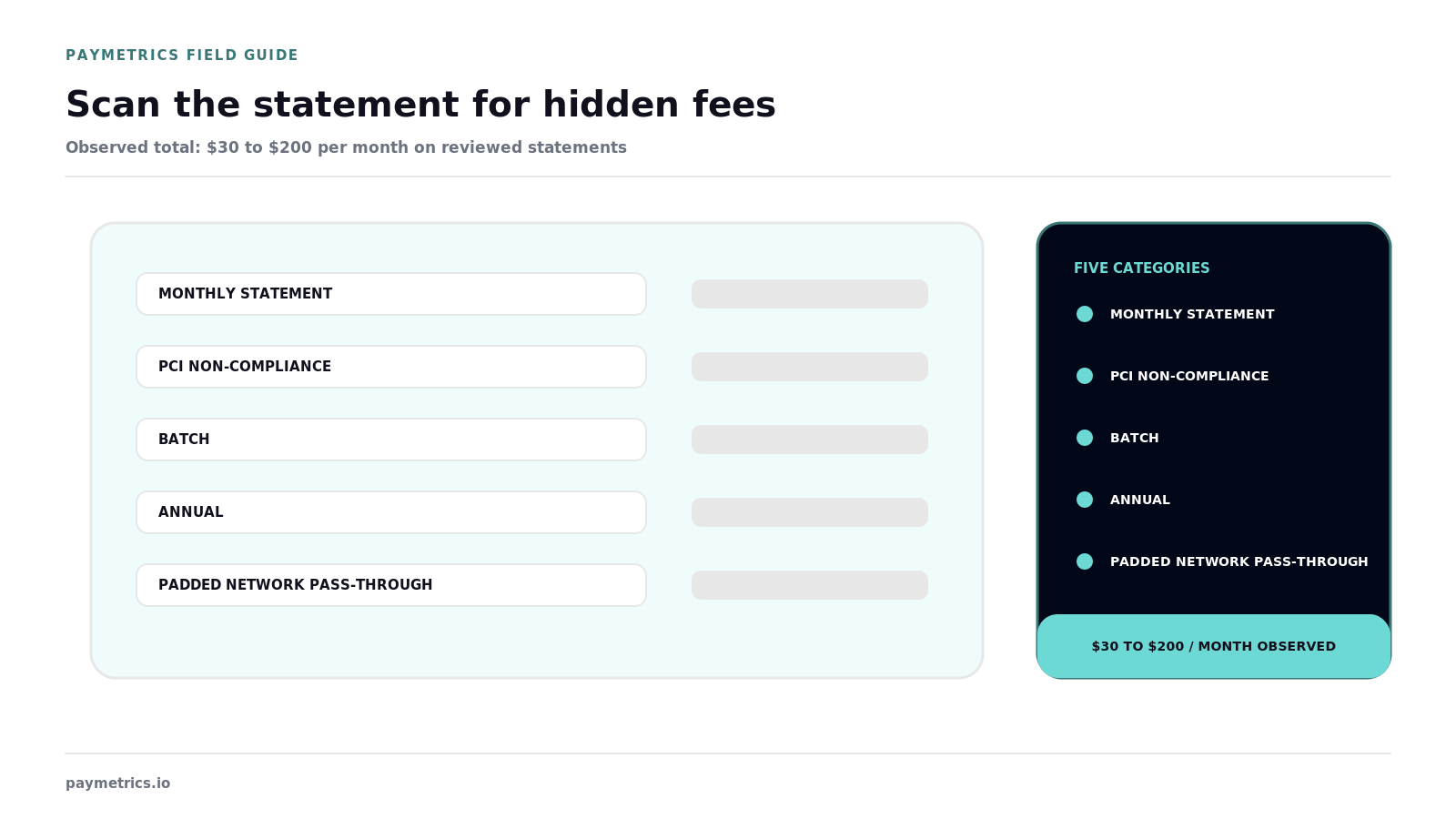
Hidden fees add $30 to $200 per month on the statements we review. The 5 most common are monthly statement fees, PCI non-compliance fees, batch fees, annual fees, and padded network pass-through charges. We document these patterns in our breakdown of the hidden costs of good enough payment systems.
How Can Merchants Pay Less Without Switching Banks?
Merchants cut fees 3 ways: repricing the markup, fixing downgrades, and shifting cost with compliant surcharging. Dual pricing credit card processing can reduce a merchant's card cost to near zero by presenting a cash price and a card price at checkout.
Downgrades matter just as much. Transactions missing AVS data or settled late fall to higher interchange tiers, a fixable problem most merchants never audit. That inertia is exactly why businesses never optimize payments.
What Do the 3 Main Pricing Models Mean for Your Bill?
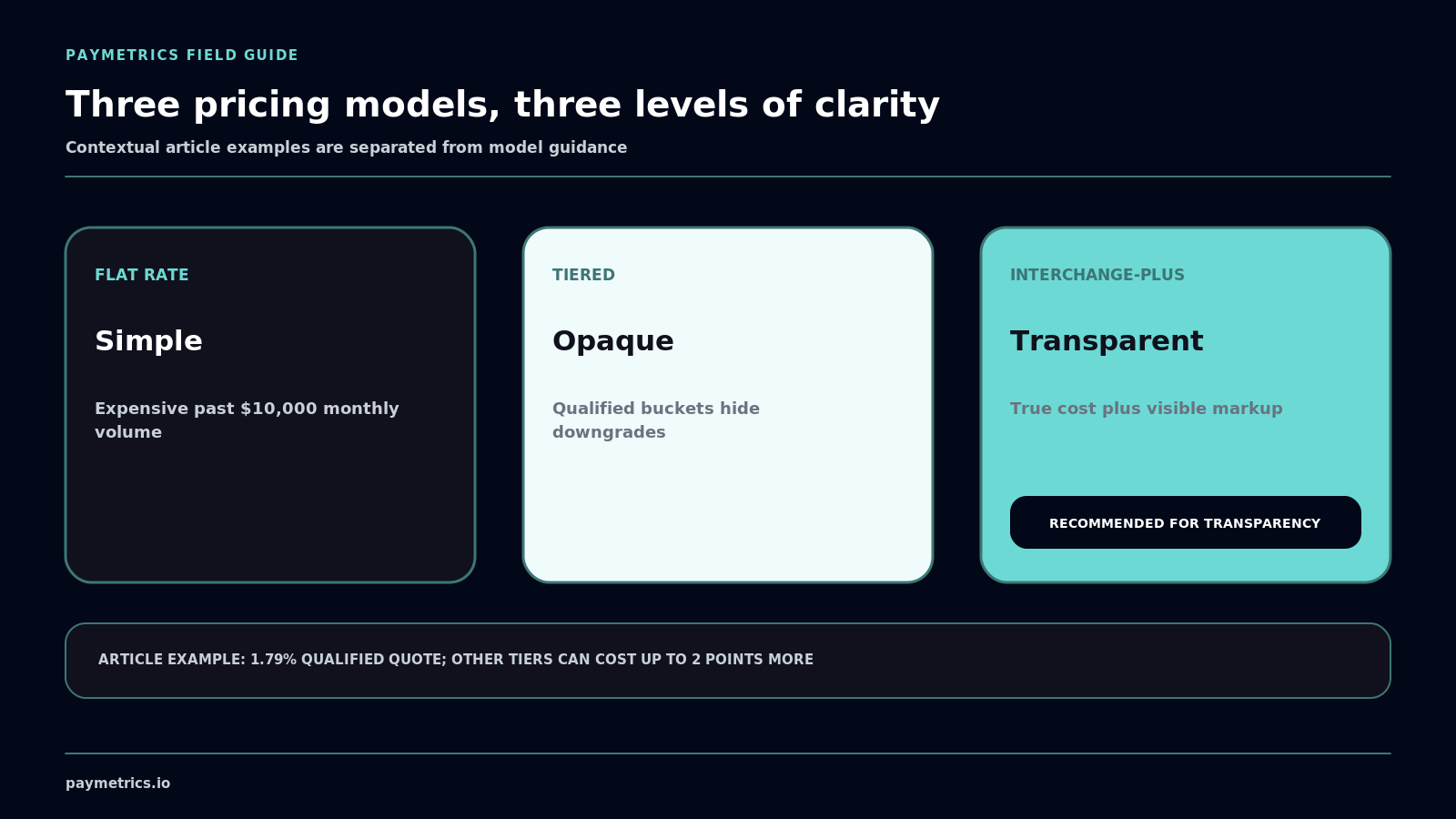
Processors package these fees into 3 pricing models, and the model matters more than the quoted rate:
- Flat rate: 1 blended percentage, simple but expensive past $10,000 monthly volume
- Tiered: qualified, mid-qualified, and non-qualified buckets that hide downgrades
- Interchange-plus: true cost plus a visible markup, the model we recommend for transparency
Tiered pricing generates the ugliest statements we audit. A rate quoted at 1.79% applies only to the qualified tier, while half the merchant's real volume lands in tiers costing 2 points more.
How Often Should You Re-Audit Your Effective Rate?
Re-audit your effective rate every 6 months, because processor pricing drifts upward through scheduled increases and new fee line items. A 15-minute review twice a year catches drift while it is still a phone call to fix rather than a year of overpayment.
How Do Card-Present and Card-Not-Present Rates Differ?
Card-not-present transactions cost 0.3% to 0.5% more than card-present sales because the fraud risk is higher and the issuer prices that risk into interchange. A retail counter sale might cost 2.2% while the identical dollar amount taken over the phone costs 2.7%.
Businesses running both channels should look at their blended rate with that mix in mind. A rising effective rate sometimes reflects a shift toward phone and online orders rather than any change from the processor.
What Is a Realistic Target Rate by Business Type?
Realistic targets run 2.2% to 2.6% for card-present retail, 2.7% to 3.2% for ecommerce, and 3.0% to 3.5% for phone orders and high-risk verticals. Rates above these ranges are worth challenging, and rates far below them usually hide fees elsewhere on the statement. Compare against the range that matches how you actually take payments.
Related Fee Questions Merchants Ask Us
Are Processing Fees Tax Deductible?
Yes, processing fees are a deductible business expense in all 50 states. Your year-end processing statement doubles as tax documentation.
Does Recurring Billing Change Your Rate?
Subscription businesses using recurring billing qualify for stored-credential interchange rates, and clean automatic payment setups reduce declines that otherwise inflate effective cost.
Table of Contents
Subscribe to our newsletter
Get the latest insights and updates delivered to your inbox.
How to Prevent Chargebacks: 9 Merchant Controls
Most chargebacks are preventable, because most of them start as a customer problem rather than fraud.

How to Read a Merchant Statement: A Line-by-Line Analysis
Review a merchant statement line by line, calculate the effective rate, identify padded fees, and turn the findings into savings.
What Is a Payment Facilitator (PayFac)?
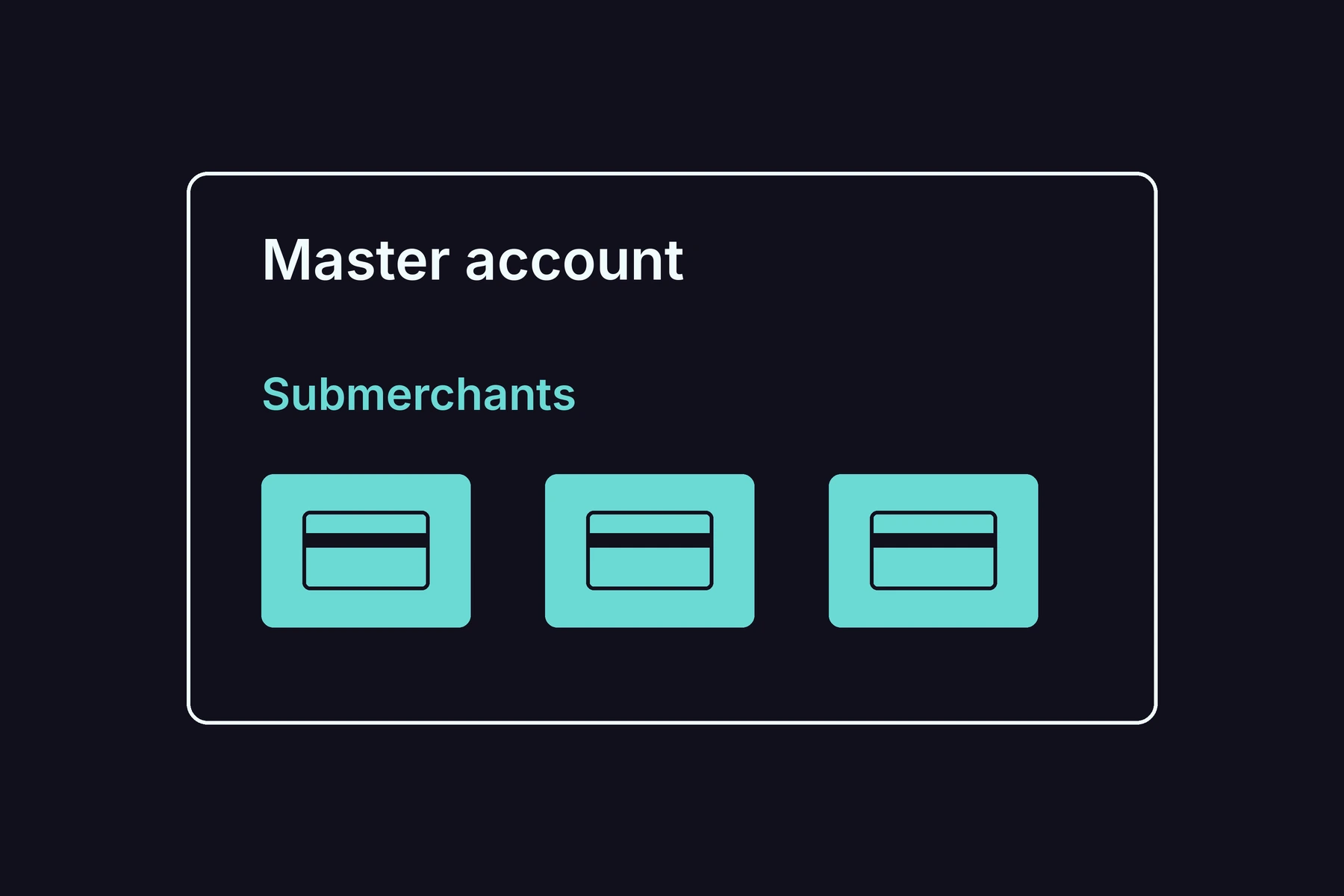
A payment facilitator, commonly shortened to PayFac, is a company that holds a master merchant account and onboards other businesses as submerchants underneath it.