Payment Gateway vs Payment Processor: How We Explain the Difference to Every New Merchant
Understand the difference between a payment gateway and payment processor, including responsibilities, fees, reporting, and support.
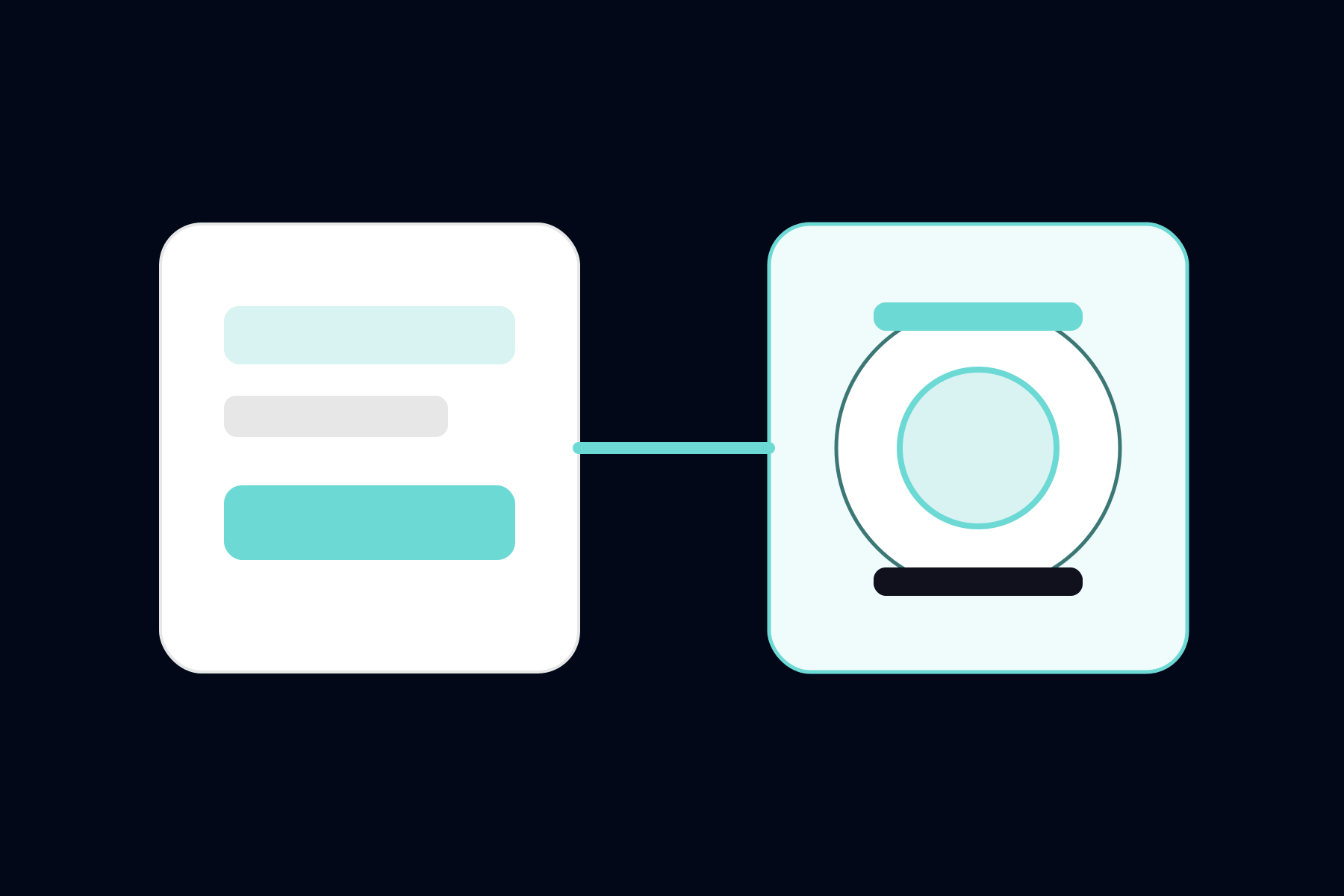
A payment gateway transmits and encrypts card data, while a payment processor moves the actual money between banks. Every online sale needs both: the gateway is the secure front door, and the processor is the settlement engine behind it.
What Does Each One Handle on a Single Sale?
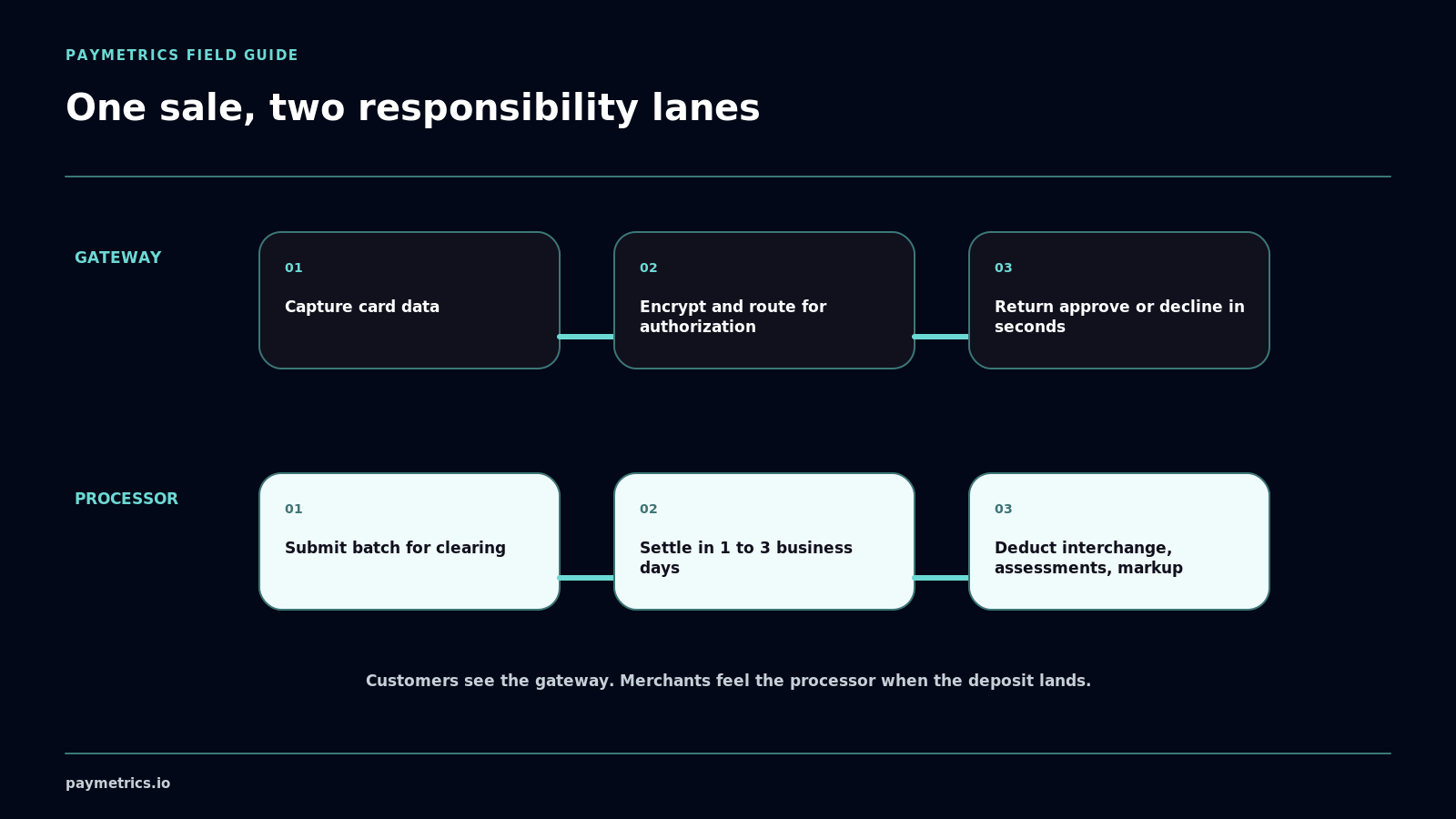
On 1 online sale, the responsibilities split cleanly:
- Gateway: captures card data at checkout, encrypts it, and routes it for authorization
- Gateway: returns the approve or decline message to the website in seconds
- Processor: submits the batch to card networks for clearing
- Processor: settles funds into the merchant account in 1 to 3 business days
- Processor: deducts interchange, assessments, and markup from the deposit
Customers only ever see the gateway. Merchants feel the processor every time a deposit lands.
Why Does the Distinction Matter for Your Costs?
The distinction matters because you can pay 2 separate bills for 1 transaction. A standalone gateway charges $10 to $25 monthly plus $0.05 to $0.10 per transaction, stacked on top of processing fees. Bundling a payment gateway with ecommerce processing from 1 provider typically eliminates the gateway line item entirely.
Why Does It Matter Even More for Support?
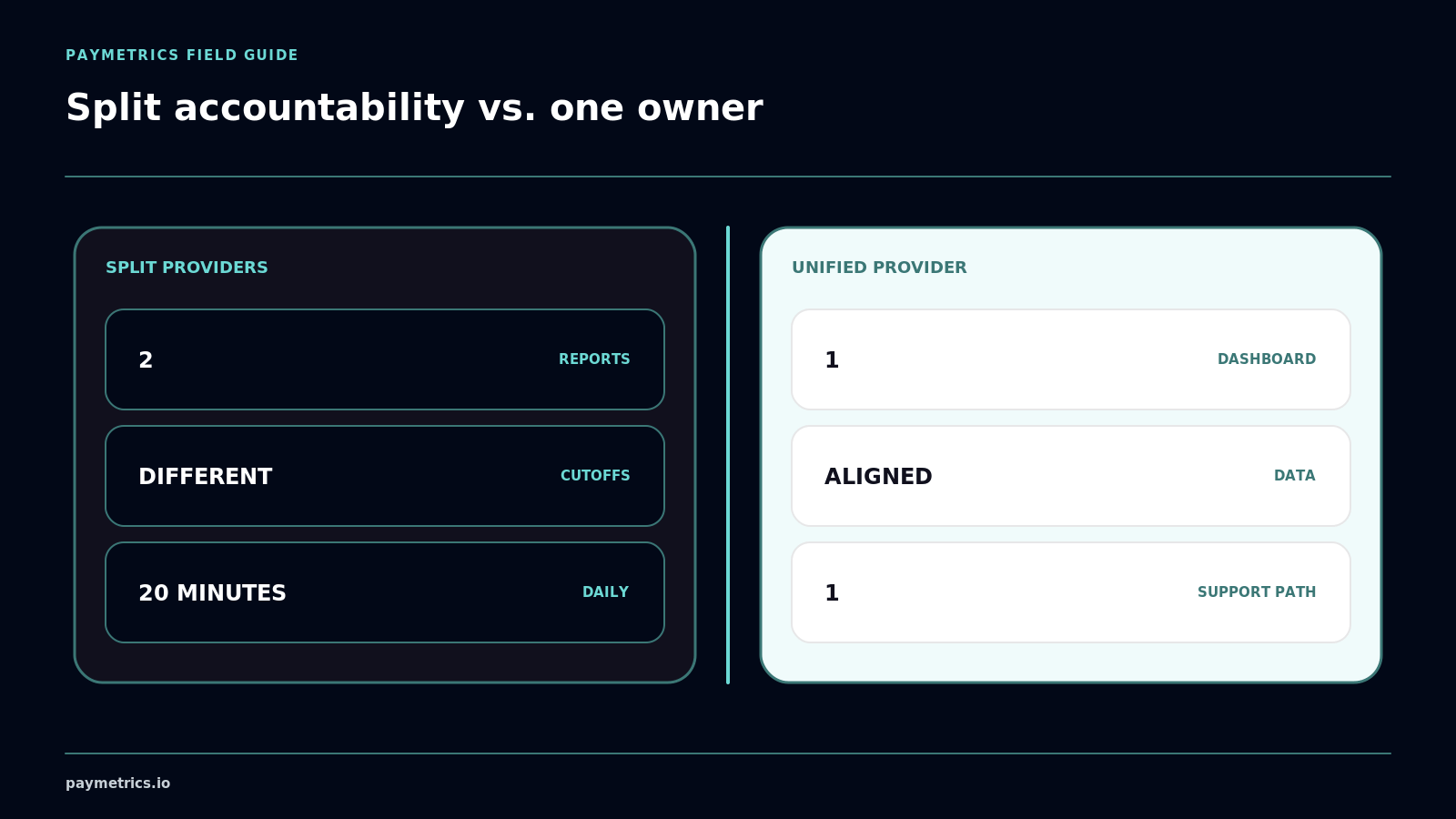
Split providers mean split accountability, and settlement problems fall into the gap. When a batch fails, the gateway blames the processor and the processor blames the gateway while your deposit sits frozen. We wrote about this exact failure mode in payment processors sell infrastructure, not accountability, and it is the top reason merchants consolidate.
The pattern repeats with disputes. Because chargebacks and declines are operational problems, you want dispute data and settlement data in 1 dashboard, not 2.
Do In-Person Merchants Need a Gateway at All?
No, card-present merchants running a POS system or countertop terminal do not need a separate gateway, because the hardware performs the capture-and-route job itself. The exception is hybrid sellers: a retailer adding online ordering or mobile payments needs gateway services layered onto existing processing.
What Questions Reveal Whether a Provider Handles Both Sides Well?
Five questions expose whether a provider truly owns both gateway and processing:
- Who do I call when a batch fails to settle, and is that team yours
- Is gateway support available 24/7 or business hours only
- Are gateway fees itemized separately or bundled into my rate
- Can I see authorization and settlement data in 1 dashboard
- What happens to my tokens if I ever leave
The token portability question matters most and gets asked least. Trapped tokens mean rebuilding your entire stored-card base if you switch, which is exactly the leverage some providers count on.
How Does This Split Affect Reporting and Reconciliation?
Split providers force daily reconciliation across 2 reports with different cutoff times, a 20-minute daily chore that unified platforms eliminate. Bookkeepers price this pain into their invoices even when merchants stop noticing it.
How Does the Split Show Up in Your Monthly Costs?
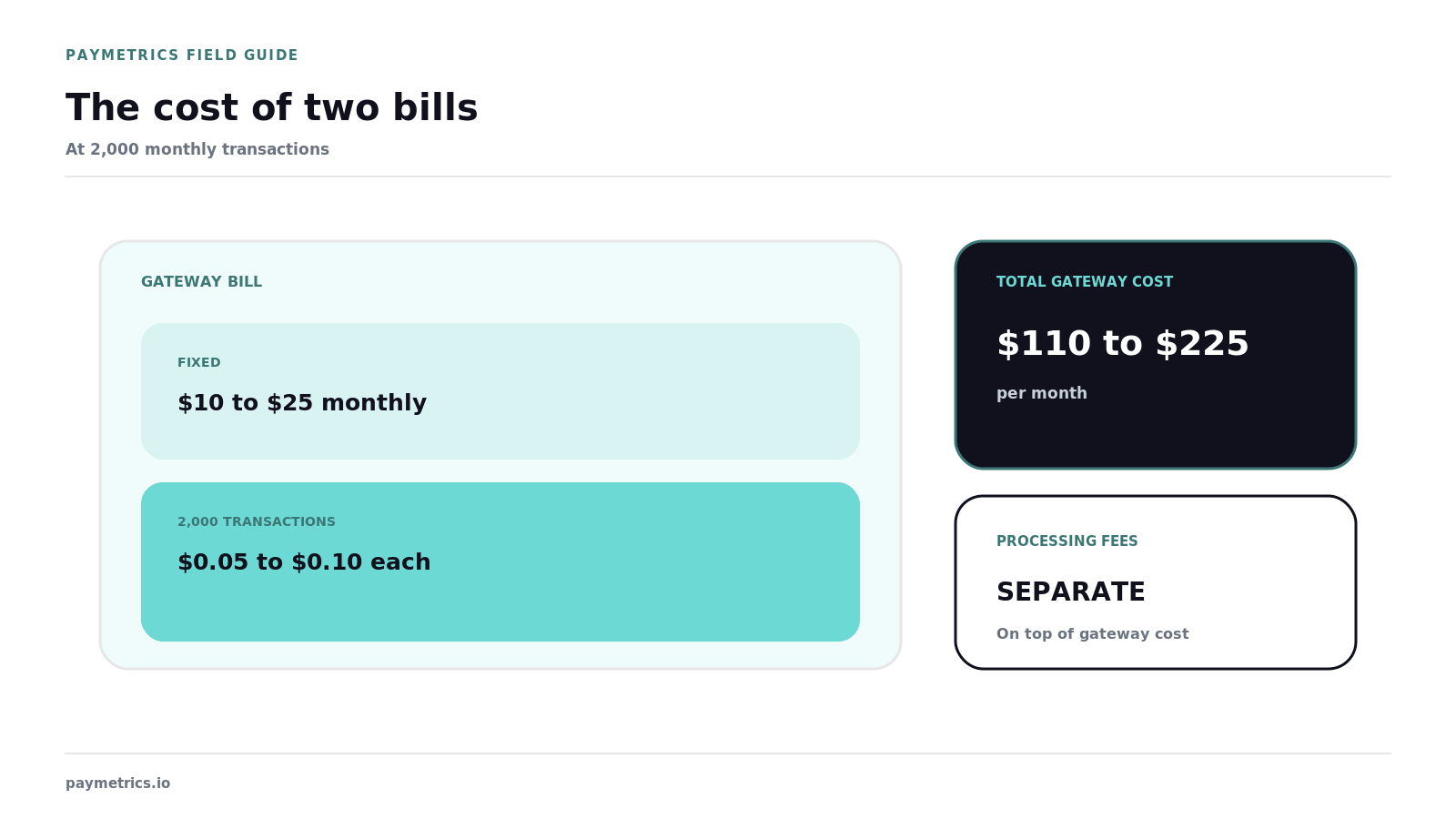
Split arrangements produce 2 bills: a gateway fee of $10 to $25 monthly plus $0.05 to $0.10 per transaction, and separate processing fees on the same volume. A merchant running 2,000 monthly transactions pays $110 to $225 in gateway costs on top of processing.
Unified providers fold that into 1 line. The savings are modest; the reconciliation and support savings are what merchants actually notice after switching.
Which Setup Should Most Small Businesses Choose?
Most small businesses are best served by a single provider handling both gateway and processing, because 1 contract, 1 statement, and 1 support number eliminate the coordination overhead that consumes owner time. Split arrangements make sense when a specific gateway feature is unavailable elsewhere, which is rarer than the market implies.
Related Questions From Merchants Comparing Providers
Where Does the Merchant Account Fit?
The merchant account is the bank relationship that receives settled funds. Gateway, processor, and merchant account form the full stack every card-accepting business runs on.
How Do Keyed Payments Fit This Split?
A virtual terminal is a gateway with a manual-entry interface, which is why phone-order and MOTO merchants still need full processing behind it.
Table of Contents
Subscribe to our newsletter
Get the latest insights and updates delivered to your inbox.
What Is a Hosted Payment Gateway? When We Recommend One Over an Integrated Checkout
Learn how hosted payment gateways work, when they reduce PCI scope, and how they compare with integrated checkout experiences.

What Is a Virtual Terminal? How Our Phone-Order Merchants Use One Every Day
See how a virtual terminal lets merchants accept phone and mail orders, what it costs, and which security controls matter.

What Is a Merchant Account? What We Walk Every New Business Owner Through First
Learn how a merchant account moves card funds, how it differs from a bank account, and which fees and controls to review.