What Is a Hosted Payment Gateway? When We Recommend One Over an Integrated Checkout
Learn how hosted payment gateways work, when they reduce PCI scope, and how they compare with integrated checkout experiences.
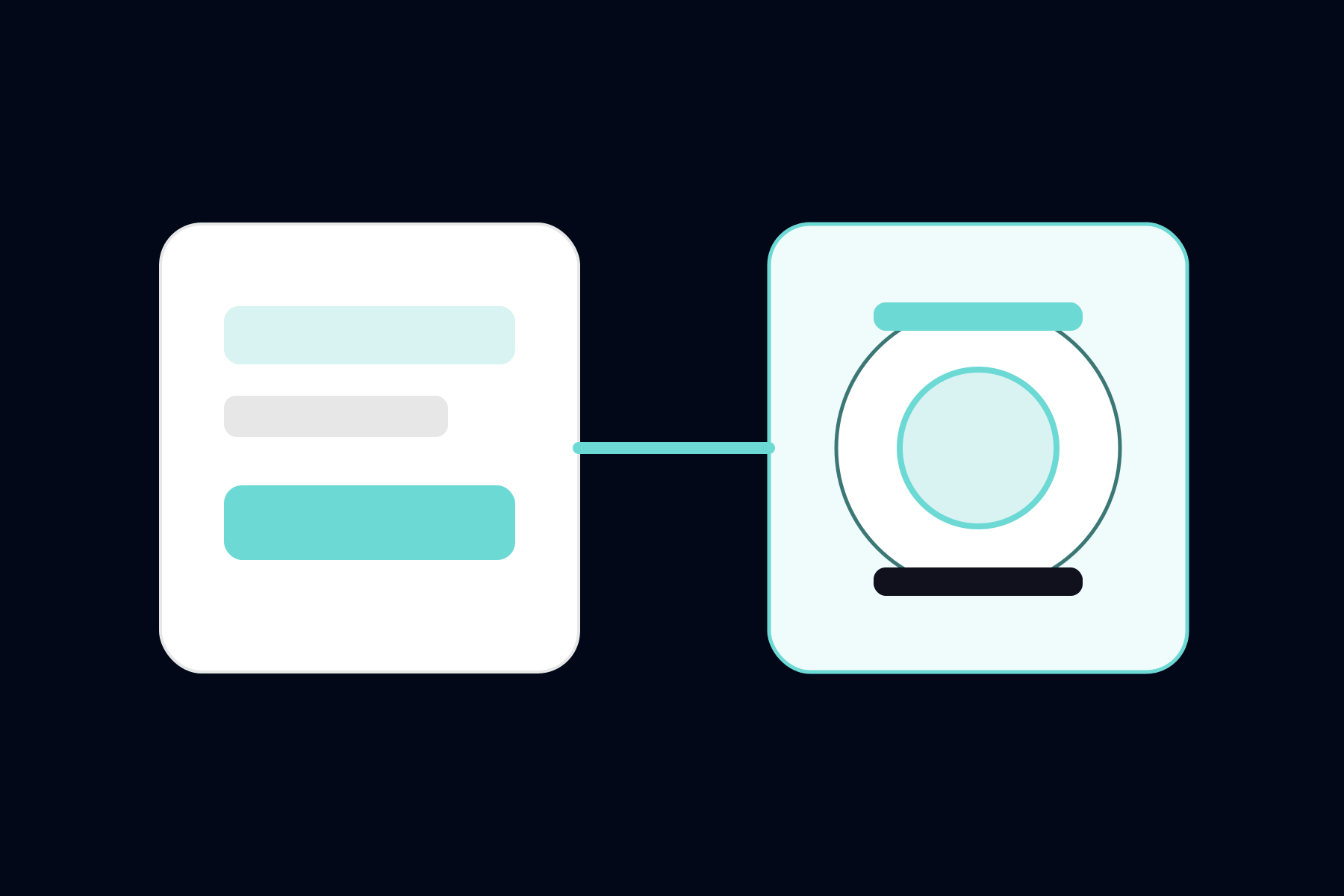
A hosted payment gateway redirects customers to a secure payment page run by the gateway provider, so card data never touches the merchant's website. It is the fastest, lowest-liability way to accept cards online, and we recommend it to most merchants processing under $50,000 a month.
How Does a Hosted Gateway Work in 4 Steps?
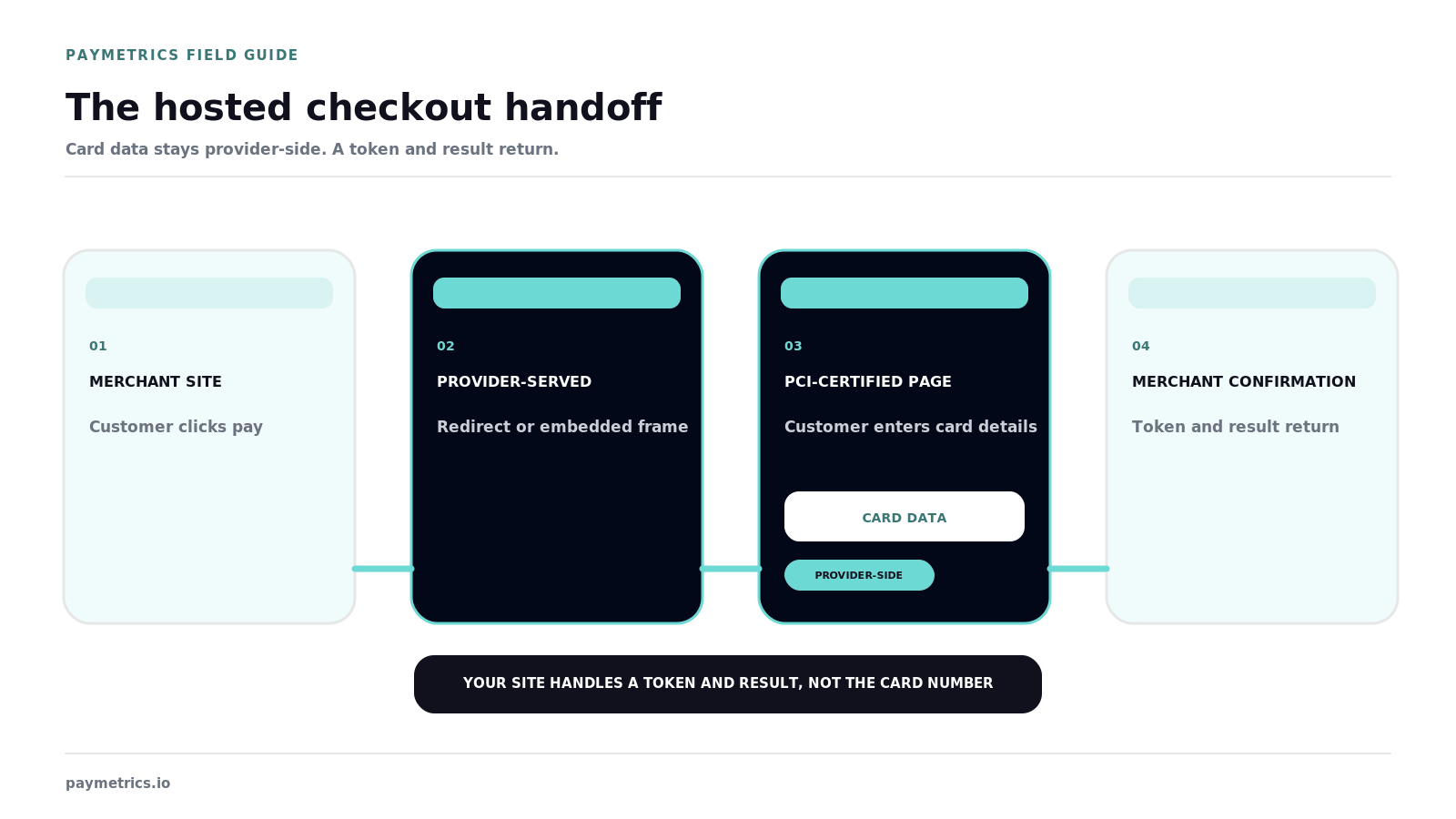
A hosted checkout completes in 4 steps:
1. Customer clicks pay on the merchant's site
2. Browser redirects or opens an embedded frame served by the gateway provider
3. Customer enters card details on the provider's PCI-certified page
4. Gateway authorizes the payment and returns the customer with a confirmation
The card number lives only on the provider's servers. Your site handles a token and a result, nothing more.
What Are the 3 Biggest Advantages of Hosting?
Hosted gateways win on 3 fronts: compliance, speed, and cost. PCI scope drops to the shortest SAQ-A questionnaire because you never store or transmit card data. Setup takes 1 to 2 days instead of a 2-to-6-week API build. And there is no developer bill, which matters for the professional services firms and nonprofits we onboard without technical staff.
What Are the Trade-Offs?
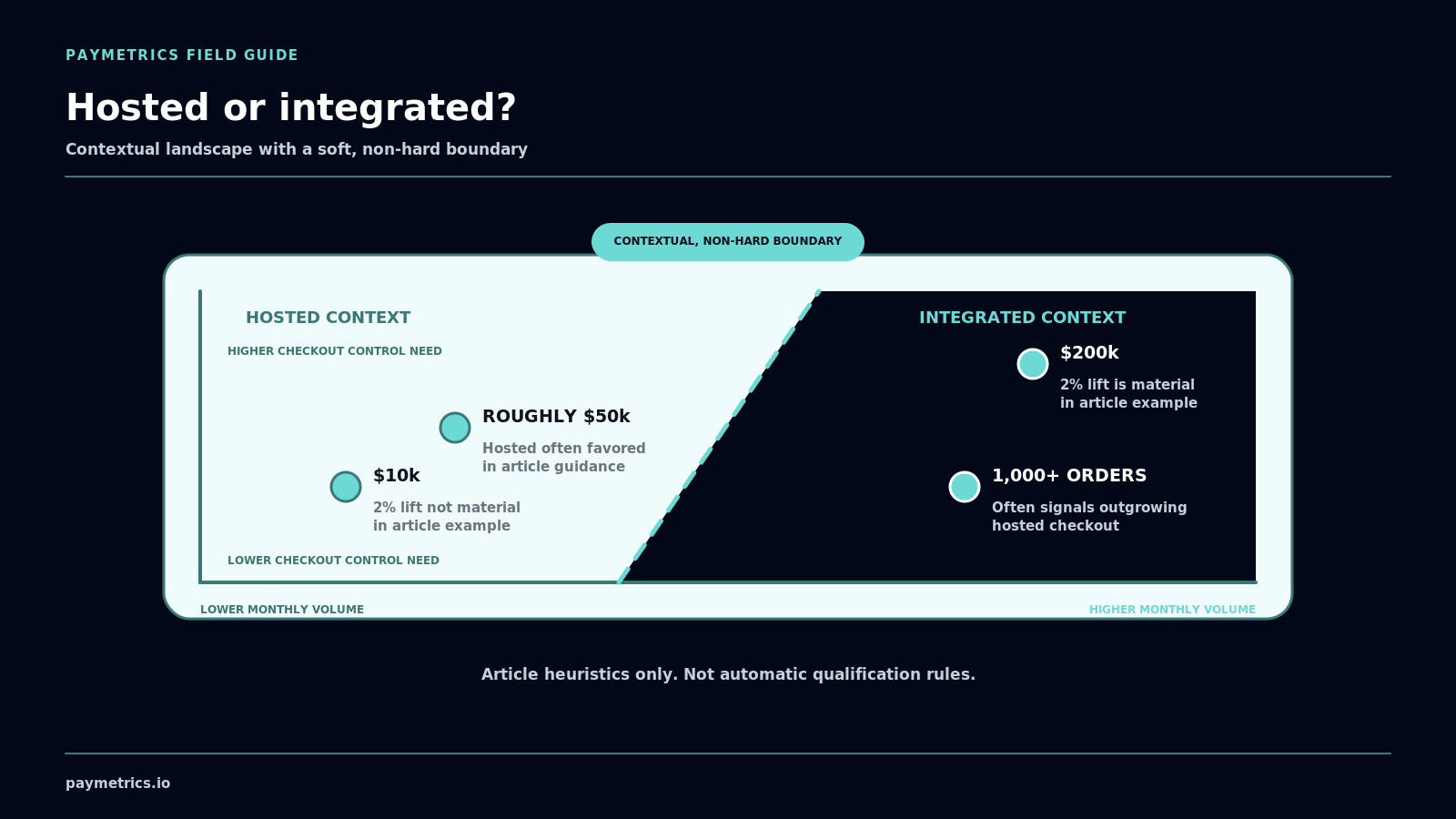
Hosted checkouts trade control for simplicity in 3 ways. Branding options are limited to logos and colors, redirects can shave 1% to 3% off conversion for high-volume stores, and checkout flow customization is capped. Merchants processing 1,000+ orders a month on serious ecommerce payment infrastructure usually outgrow hosting and move to a direct payment gateway integration.
The decision is volume math, not preference. A 2% conversion lift is worth a developer project at $200,000 a month and irrelevant at $10,000.
Which Businesses Fit Hosted Gateways Best?
Hosted gateways fit 4 profiles best: new online stores, service businesses collecting deposits through online invoicing, donation-driven organizations, and regulated or high-risk merchants whose processors require provider-controlled payment pages for underwriting reasons.
How Do You Set Up a Hosted Gateway in 1 Day?
A hosted gateway setup takes 4 steps and typically 1 business day:
5. Activate the gateway on your merchant account and confirm settlement details
6. Customize the hosted page with your logo, colors, and receipt text
7. Drop the payment button or link into your website or invoices
8. Run a $1 test transaction and confirm it appears in the dashboard
No developer is required at any step. The most technical task is pasting 1 snippet into your site, and support teams walk merchants through it on a single call.
What Conversion Data Should You Watch After Launch?
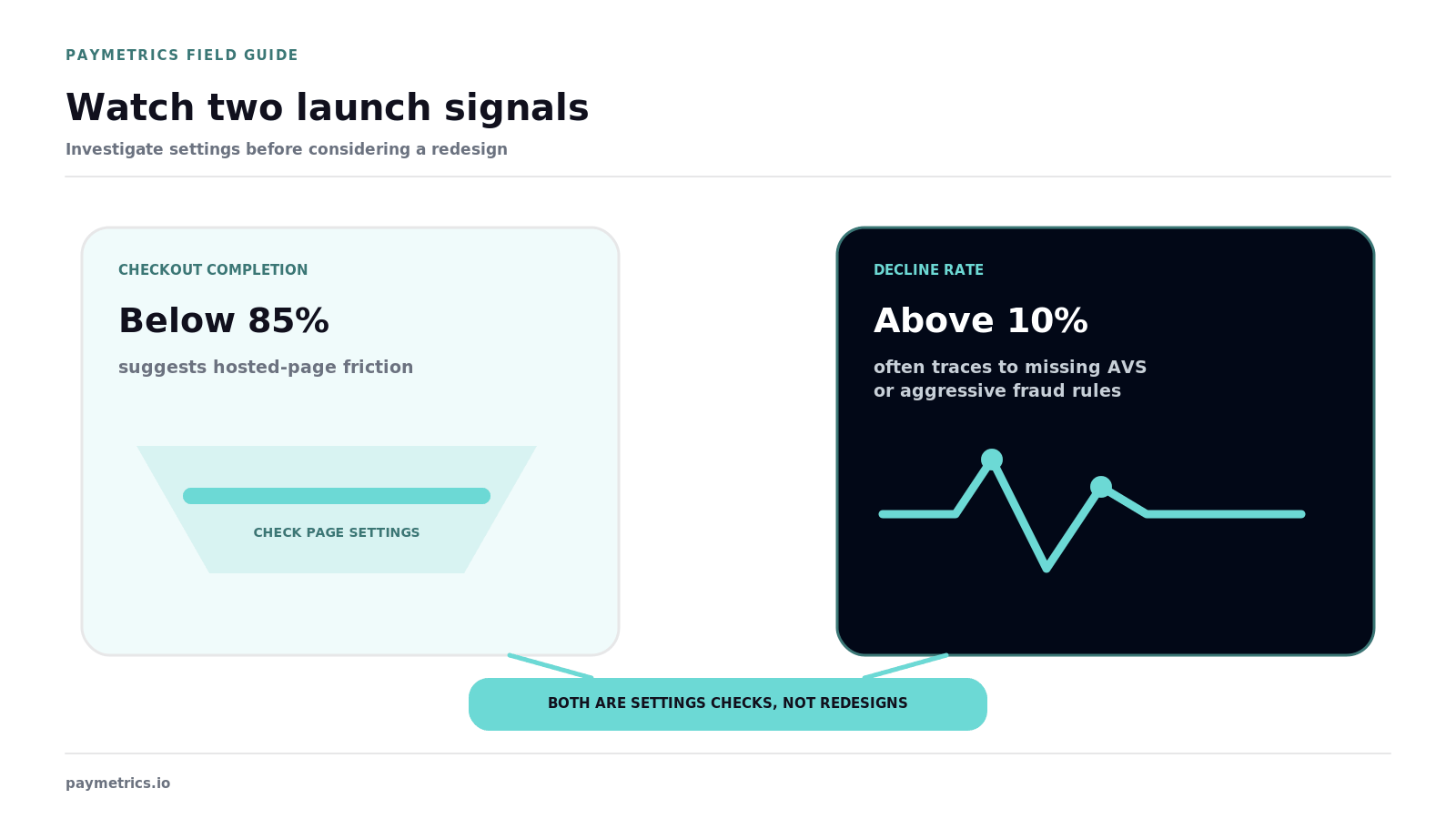
Watch 2 numbers monthly after launch: checkout completion rate and decline rate. Completion below 85% suggests friction on the hosted page, while declines above 10% usually trace to missing AVS data or fraud rules set too aggressively. Both are settings fixes, not redesigns.
When Does an Integrated Gateway Beat a Hosted Page?
An integrated gateway wins in 3 scenarios: high transaction volume where checkout conversion is worth optimizing, subscription models needing stored credentials, and brands where any redirect damages trust.
Everyone else is better served by hosted. The compliance reduction and setup speed outweigh the branding compromise for businesses processing under roughly $50,000 monthly, and the upgrade path stays open.
What Does a Hosted Page Cost to Run?
Hosted gateway pricing typically runs $10 to $25 monthly plus $0.05 to $0.10 per transaction, and many bundled providers include it at no separate charge. Compare that against the PCI assessment costs a self-hosted setup triggers, and the hosted option usually wins on total cost for businesses under $50,000 monthly volume. Factor in developer time as well, since a self-hosted integration requires ongoing maintenance every time card handling requirements change, while a hosted page updates on the provider's side without touching your site.
Related Checkout Decisions Merchants Face
What About Phone and Mail Orders?
Phone orders skip the checkout page entirely and run through a virtual terminal, the keyed-entry counterpart covered in our MOTO payments guide.
Does Hosting Affect Subscriptions?
No, hosted pages tokenize cards the same way, so recurring billing schedules run off the stored token. Set up the plan logic first using our guide on how to set up automatic payments.
Table of Contents
Subscribe to our newsletter
Get the latest insights and updates delivered to your inbox.
Payment Gateway vs Payment Processor: How We Explain the Difference to Every New Merchant
Understand the difference between a payment gateway and payment processor, including responsibilities, fees, reporting, and support.

What Is a Virtual Terminal? How Our Phone-Order Merchants Use One Every Day
See how a virtual terminal lets merchants accept phone and mail orders, what it costs, and which security controls matter.

What Is a Merchant Account? What We Walk Every New Business Owner Through First
Learn how a merchant account moves card funds, how it differs from a bank account, and which fees and controls to review.