What Is a High-Risk Merchant Account? Lessons From the High-Risk Industries We Serve
Learn why merchant accounts are classified as high risk, how reserves work, and what improves approval terms over time.

A high-risk merchant account is a payment processing account underwritten for businesses with elevated chargeback exposure, regulatory complexity, or industry reputation issues. It carries higher rates and stricter terms, but for the industries we serve, it is the difference between processing payments and losing the account mid-growth.
What Makes a Business High Risk?
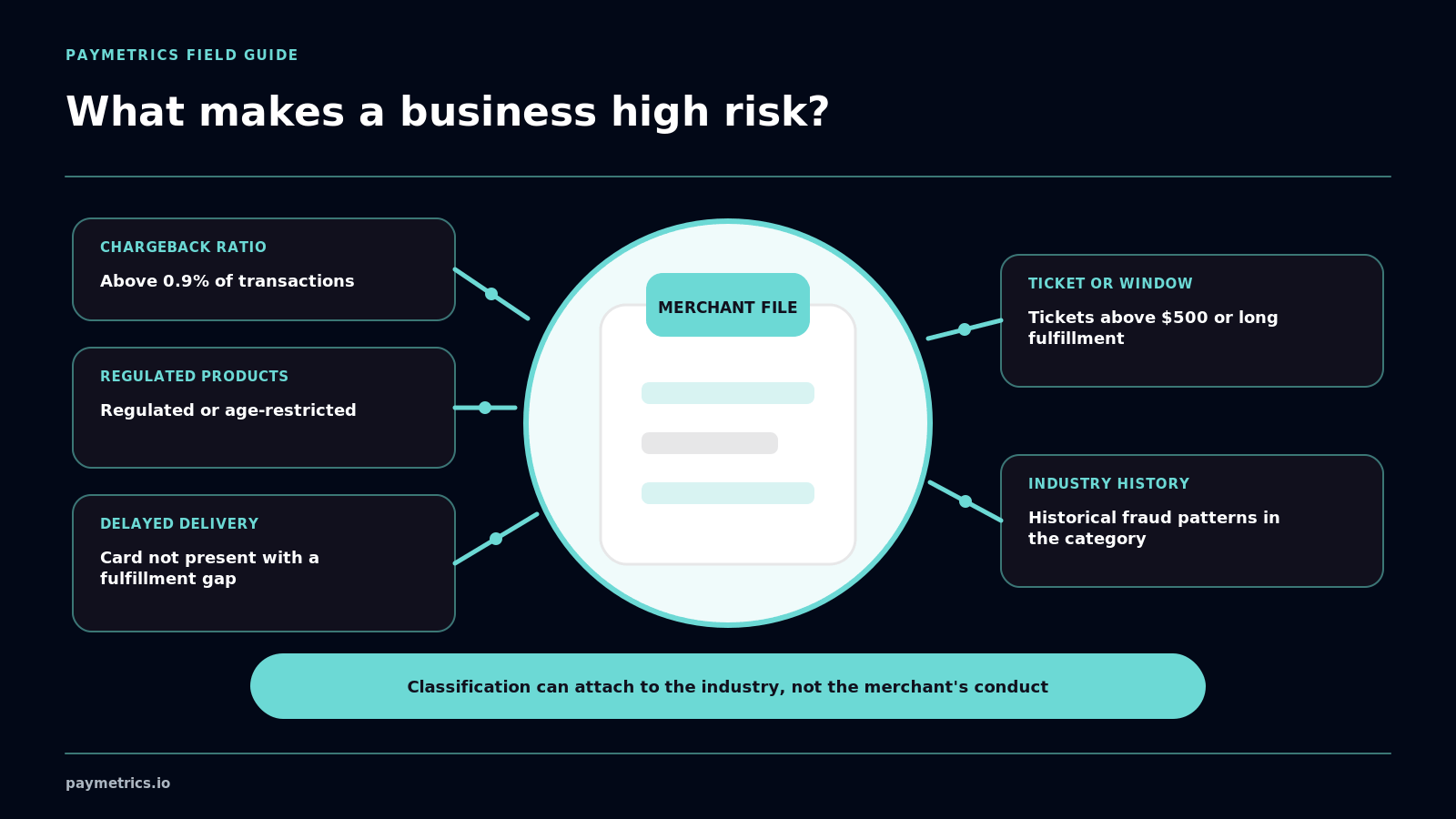
Five factors push a business into the high-risk category:
- Chargeback ratios above 0.9% of transactions
- Regulated or age-restricted products like CBD, firearms, or supplements
- Card-not-present sales models with delayed delivery
- Large average tickets above $500 or long fulfillment windows
- Industries with historical fraud patterns, regardless of the individual business
The label attaches to the industry, not your conduct. A flawless supplement brand is high risk on day 1; a sloppy bakery is not.
How Do High-Risk Terms Differ From Standard Accounts?
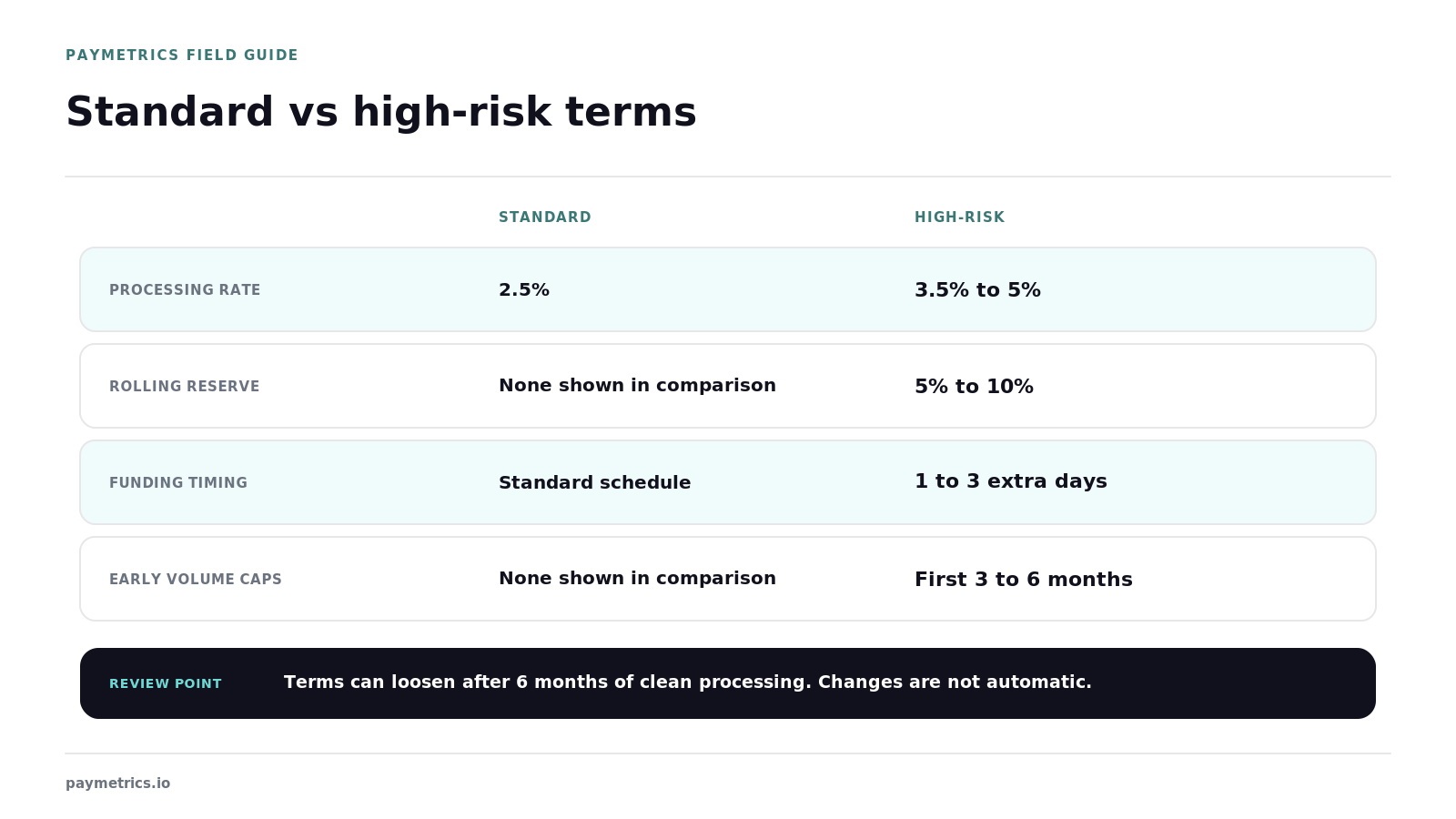
High-risk accounts differ on 4 terms: rates of 3.5% to 5% instead of 2.5%, rolling reserves of 5% to 10%, funding delays of 1 to 3 extra days, and volume caps for the first 3 to 6 months. Underwriting also goes deeper, reviewing websites, fulfillment terms, and refund policies line by line.
These terms loosen with history. After 6 months of clean processing through our high-risk merchant services, reserves shrink and caps lift on a schedule.
Why Is the Wrong Account More Expensive Than the Right One?
The wrong account costs more because standard processors terminate high-risk merchants after approval, freezing funds for 90 to 180 days. We onboard 2 to 3 merchants a month recovering from exactly this, a failure mode rooted in the accountability gap we describe in payment processors sell infrastructure, not accountability.
Dispute management decides survival either way. Since chargebacks and declines are operational problems, high-risk merchants need alerts, blocklists, and response workflows running from week 1.
Which Tools Do High-Risk Merchants Run On?
High-risk merchants run the same stack as everyone else, configured for scrutiny. Online sellers pair a hardened payment gateway with ecommerce checkout, subscription models use descriptor-clean recurring billing, and phone sales route through a logged virtual terminal.
How Do You Apply for a High-Risk Account the Right Way?
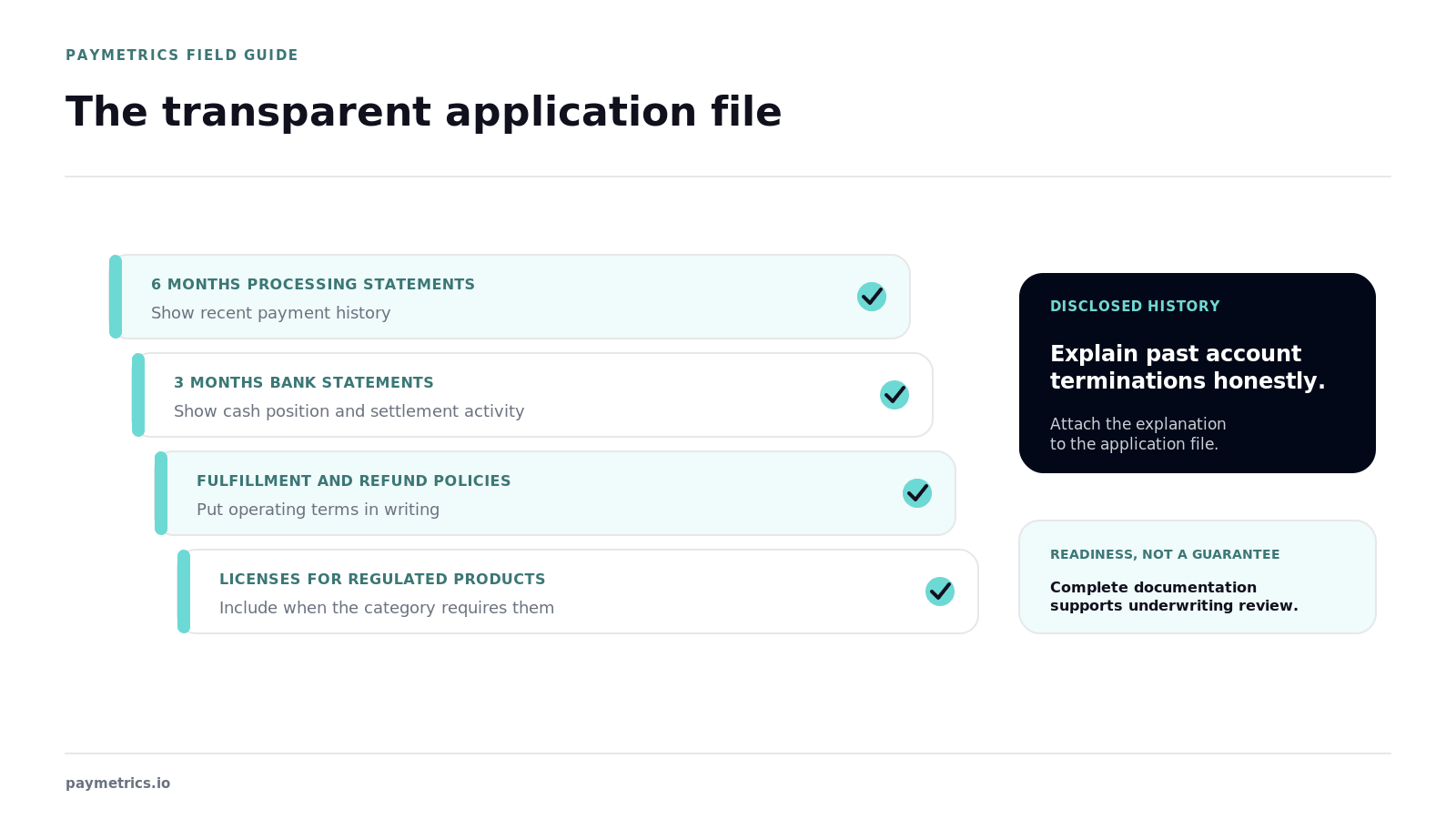
Apply the right way by over-documenting up front: 6 months of processing statements, 3 months of bank statements, fulfillment and refund policies in writing, and licenses for regulated products. High-risk underwriters approve transparency and decline mystery, so the thickest application file wins.
Disclose past account terminations honestly. Underwriters see the MATCH list either way, and an explained history approves where a hidden one cannot.
What Ongoing Obligations Come With High-Risk Approval?
High-risk approval carries 3 ongoing obligations: monthly dispute ratios kept under network thresholds, advance notice before product line or volume changes, and periodic underwriting refreshes with updated financials. Meeting them is how reserves shrink and rates fall on schedule rather than never.
What Does a Rolling Reserve Cost You in Practice?
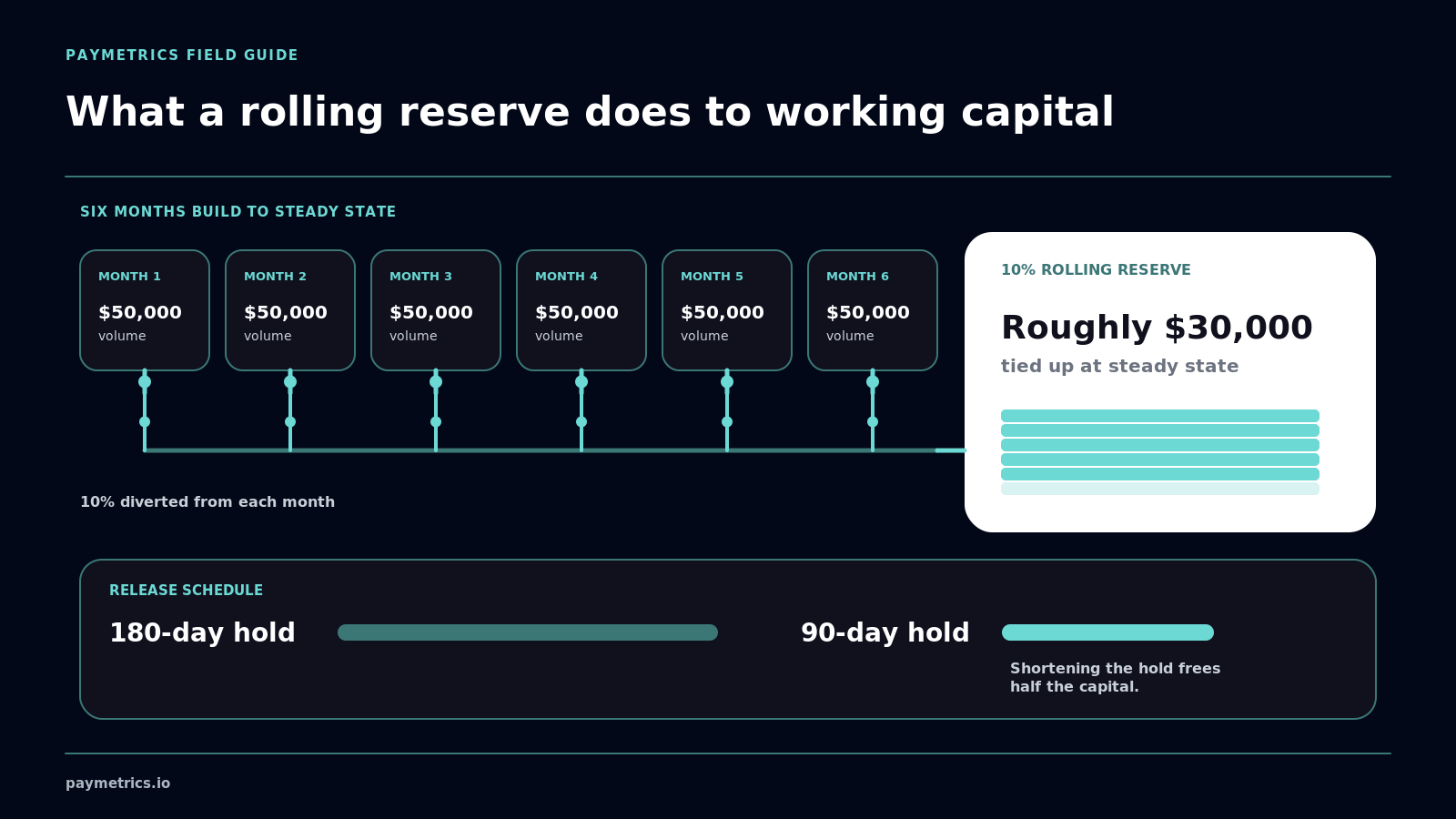
A 10% rolling reserve with a 180-day hold on $50,000 monthly volume ties up roughly $30,000 of working capital at steady state. The money is yours and releases on schedule, but it is unavailable during the exact period a growing business needs it.
Negotiate the release schedule, not just the percentage. Shortening a hold from 180 to 90 days frees half the capital without the provider reducing its risk coverage at all.
How Do You Move Off High-Risk Classification?
Classification follows the industry more than the merchant, so many businesses never leave it, but terms improve substantially with history. After 12 clean months, request a repricing review with your statements in hand. Reserves shrink and rates fall for merchants who ask, and stay put for merchants who wait to be offered.
Related High-Risk Questions We Answer Weekly
Which Industries Land in the Category?
Common categories include supplements, CBD, firearms, travel, coaching, and segments of healthcare and telehealth with card-on-file billing models.
Can High-Risk Merchants Offset the Higher Rates?
Yes, compliant dual pricing programs offset elevated rates where card brand rules allow, narrowing the cost gap to near standard.
Table of Contents
Subscribe to our newsletter
Get the latest insights and updates delivered to your inbox.

What Is a Merchant Account? What We Walk Every New Business Owner Through First
Learn how a merchant account moves card funds, how it differs from a bank account, and which fees and controls to review.
How to Set Up a Merchant Account: The 5-Step Process We Guide Merchants Through
Follow the five-step merchant account setup process, from choosing a provider and applying through approval, integration, and monitoring.

How to Get a Merchant Account With Bad Credit: What We Have Actually Seen Work
Learn what underwriters evaluate when credit is weak and which documentation, reserves, and account history can improve approval odds.