What Is a Payment Facilitator (PayFac)?
A payment facilitator, commonly shortened to PayFac, is a company that holds a master merchant account and onboards other businesses as submerchants underneath it.
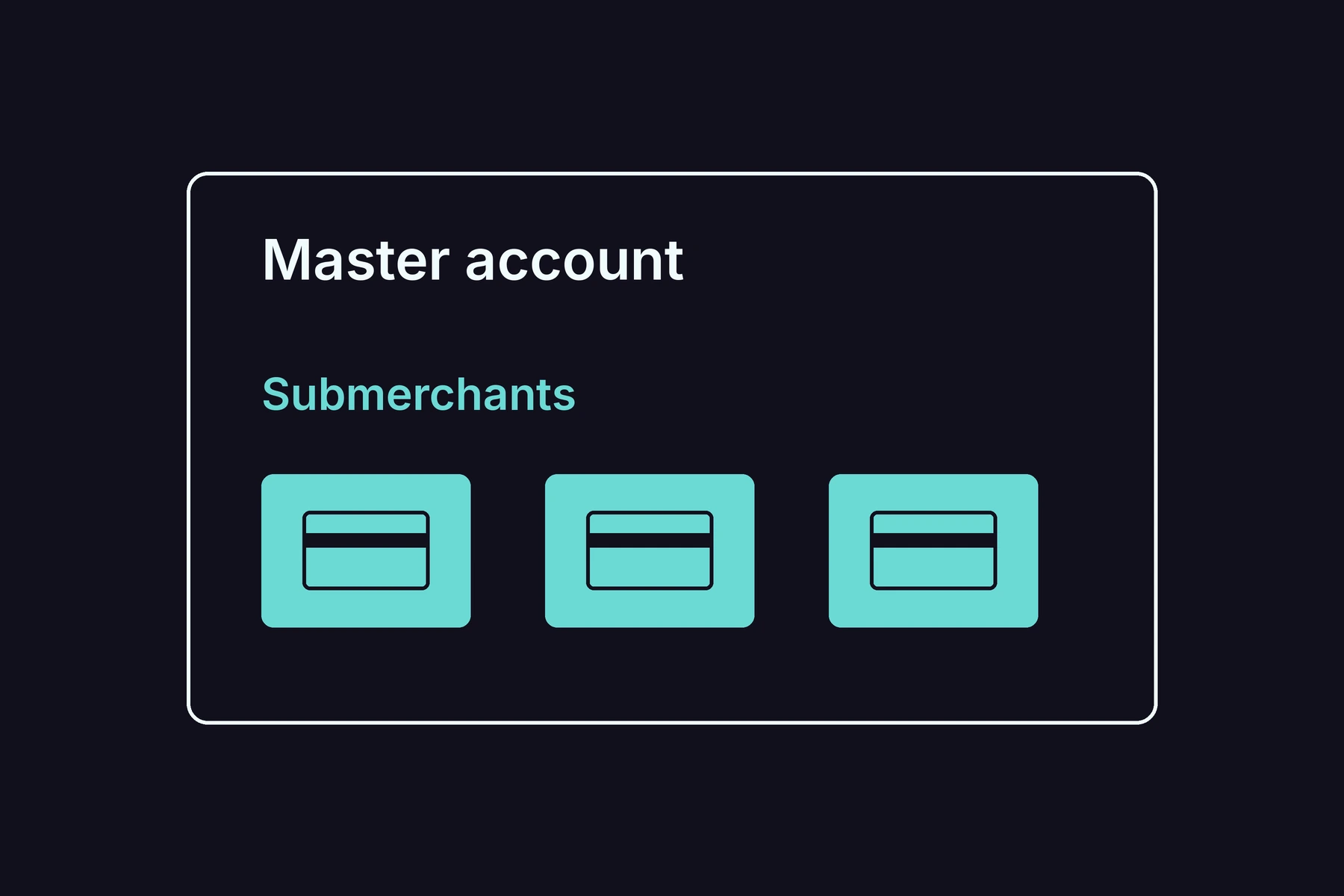
A payment facilitator, commonly shortened to PayFac, is a company that holds a master merchant account and onboards other businesses as submerchants underneath it. The submerchant gets instant approval instead of underwriting. The PayFac absorbs the risk that underwriting would otherwise have caught.
How Does the PayFac Model Work?
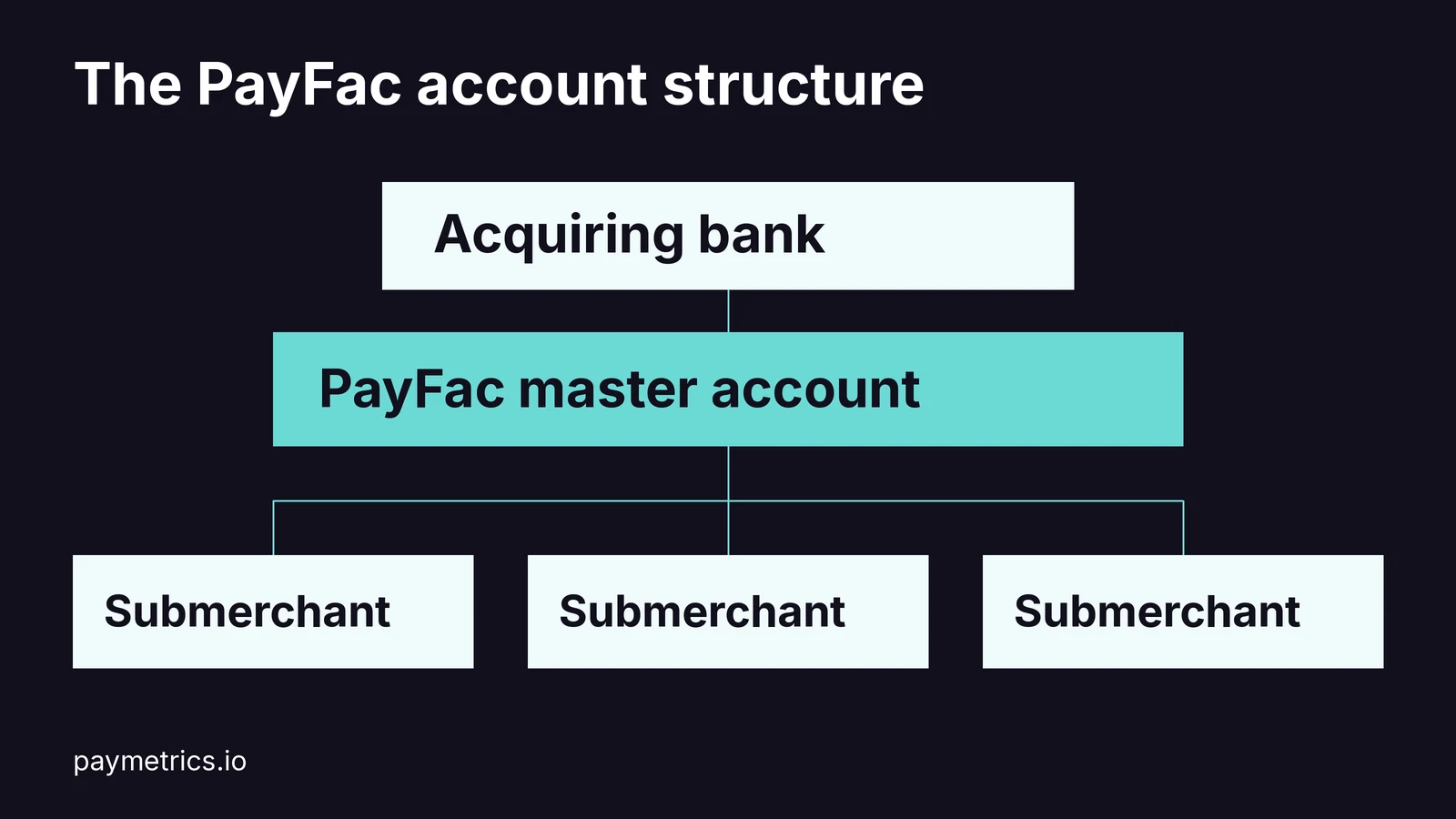
The PayFac sits between the acquiring bank and the businesses it serves. Four responsibilities define the role.
- Onboarding and screening submerchants under its own master account.
- Aggregating transaction volume across all submerchants.
- Distributing settlement funds to each submerchant.
- Absorbing chargeback and fraud liability across the portfolio.
Because the PayFac already holds the underwritten relationship, a new submerchant can begin accepting payments in minutes rather than days.
What Does the Submerchant Trade Away?
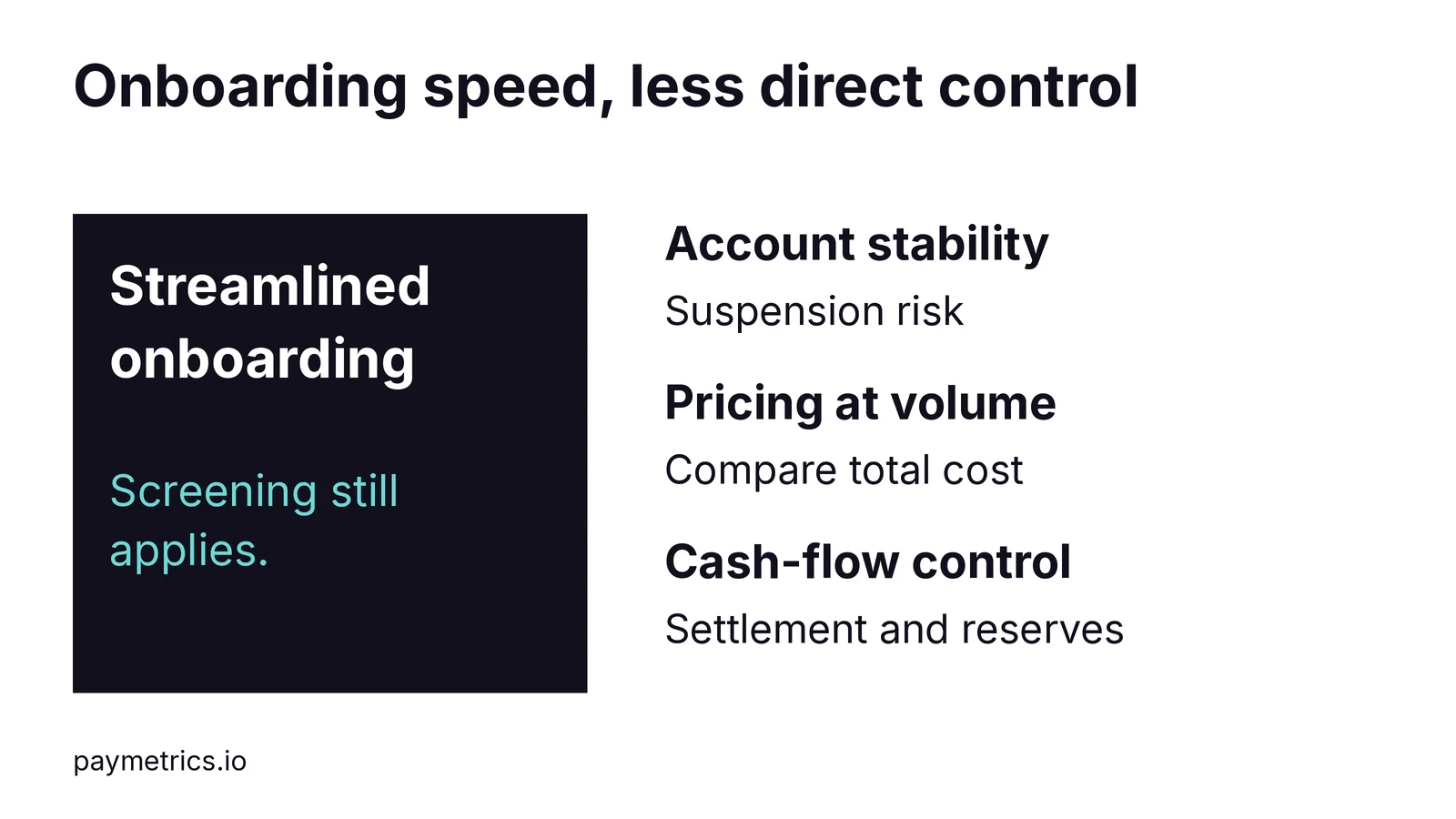
Speed comes at a cost, and the tradeoff shows up under stress rather than at signup. Three differences matter.
- Stability: a PayFac can suspend a submerchant unilaterally and quickly.
- Pricing: flat-rate pricing is simpler but generally costs more at volume.
- Control: settlement timing and reserve terms are set by the PayFac.
Businesses that outgrow the model usually move to a dedicated account. The comparison is covered in what is a merchant account.
When Should a Business Become a PayFac?
Becoming a PayFac makes sense for software platforms that serve many small merchants and want payments as a revenue line. Four conditions typically need to hold.
- A large base of merchants already using the platform.
- Enough aggregate volume to justify the compliance burden.
- Capital to absorb chargeback and fraud losses.
- Appetite for ongoing regulatory and network obligations.
What Does Becoming a PayFac Require?
Registration with the card networks, a sponsoring acquirer relationship, PCI DSS validation at the highest level, underwriting and KYC procedures for submerchants, and anti-money-laundering controls. Setup is measured in months and meaningful upfront cost.
What Is a Managed PayFac?
Managed PayFac and payfac-as-a-service models let a platform monetize payments without building the full compliance stack. A provider handles registration, underwriting infrastructure, and compliance while the platform keeps the merchant relationship and a share of the revenue.
Why Platforms Choose the Managed Route
Why Platforms Choose the Managed Route
This is now the more common route for software companies, since it captures most of the economics without the multi-year build.
How Does Settlement Work for Submerchants?
Settlement runs through the PayFac rather than direct from the acquirer, which changes timing and visibility. Four practical effects follow.
- Funding schedules are set by the PayFac, not by your bank.
- Reserves and holds can be applied at the PayFac’s discretion.
- Reporting comes from the PayFac’s dashboard rather than a bank statement.
- Payout frequency is often configurable, sometimes at additional cost.
Submerchants planning around cash flow should confirm the standard funding window and the conditions that trigger a hold before volume ramps.
How Does a PayFac Differ From a Payment Processor?
A processor moves transaction data between the parties in a payment. A PayFac is a merchant of record that onboards and manages other businesses, and it uses a processor to actually move the transactions.
Why the Distinction Matters in Practice
Why the Distinction Matters in Practice
The distinction matters when diagnosing a problem, since the two control different parts of the chain. Processor responsibilities are covered in payment gateway vs payment processor.
Integration Paths for Platforms
Integration Paths for Platforms
Platforms evaluating embedded payments can review our technology partners page for integration paths.
Frequently Asked Questions
Are Stripe and Square payment facilitators?
Yes. Both operate as payment facilitators, onboarding businesses as submerchants under their own master accounts, which is why signup takes minutes instead of days.
Who is liable for chargebacks under a PayFac?
The PayFac carries ultimate liability to the acquirer and typically recovers losses from the submerchant. Contract terms define the recovery mechanism, including reserves and offsets against future settlement.
Is PayFac pricing more expensive?
Flat-rate PayFac pricing usually costs more than interchange plus pricing at volume, and it costs less in setup time and administration. The crossover point varies by ticket size and card mix.
Can a submerchant be shut off without warning?
Yes. PayFac agreements generally permit suspension for risk reasons with limited notice, which is the main argument for a dedicated account once a business depends on card revenue.
Table of Contents
Subscribe to our newsletter
Get the latest insights and updates delivered to your inbox.
How to Calculate Credit Card Processing Fees: The 3-Step Method We Use on Every Statement Audit
Calculate your effective processing rate in three steps, compare healthy ranges, and find hidden costs on merchant statements.
What Is 3D Secure and Should You Enable It?
3D Secure is an authentication protocol that verifies a cardholder’s identity during online checkout before the transaction is authorized.

How Does Credit Card Processing Work? A Step-by-Step Breakdown From Our Processing Team
Follow card processing from authorization through clearing, settlement, fees, and deposit in a practical step-by-step guide.