What Are Interchange Fees and Who Sets Them?
Learn who sets interchange fees, which cost layers are negotiable, and how transaction data and settlement timing affect qualification.

Interchange fees are the portion of a card transaction paid to the bank that issued the customer’s card. Visa and Mastercard publish the rates, but they do not keep the money. The issuing bank does, which is why no processor can discount interchange.
Who Sets Interchange Rates?
Card networks set interchange rates, and they publish updated schedules twice a year, in April and October. Networks act as the rule-setting body between issuing banks and acquiring banks. Processors pass the published rate through and add their own margin on top.
Can a Processor Lower Your Interchange Rate?
No processor can lower a published interchange rate. A processor can lower the markup layered above interchange, and it can help a merchant qualify transactions at better interchange categories. Confusing those two is the most common misreading on a merchant statement analysis.
What Are the 3 Layers of a Processing Cost?
Every card transaction carries 3 stacked costs.
- Interchange: paid to the issuing bank, set by the card network.
- Assessments: paid to the card network itself, a small percentage of volume.
- Processor markup: paid to your provider, the only negotiable layer.
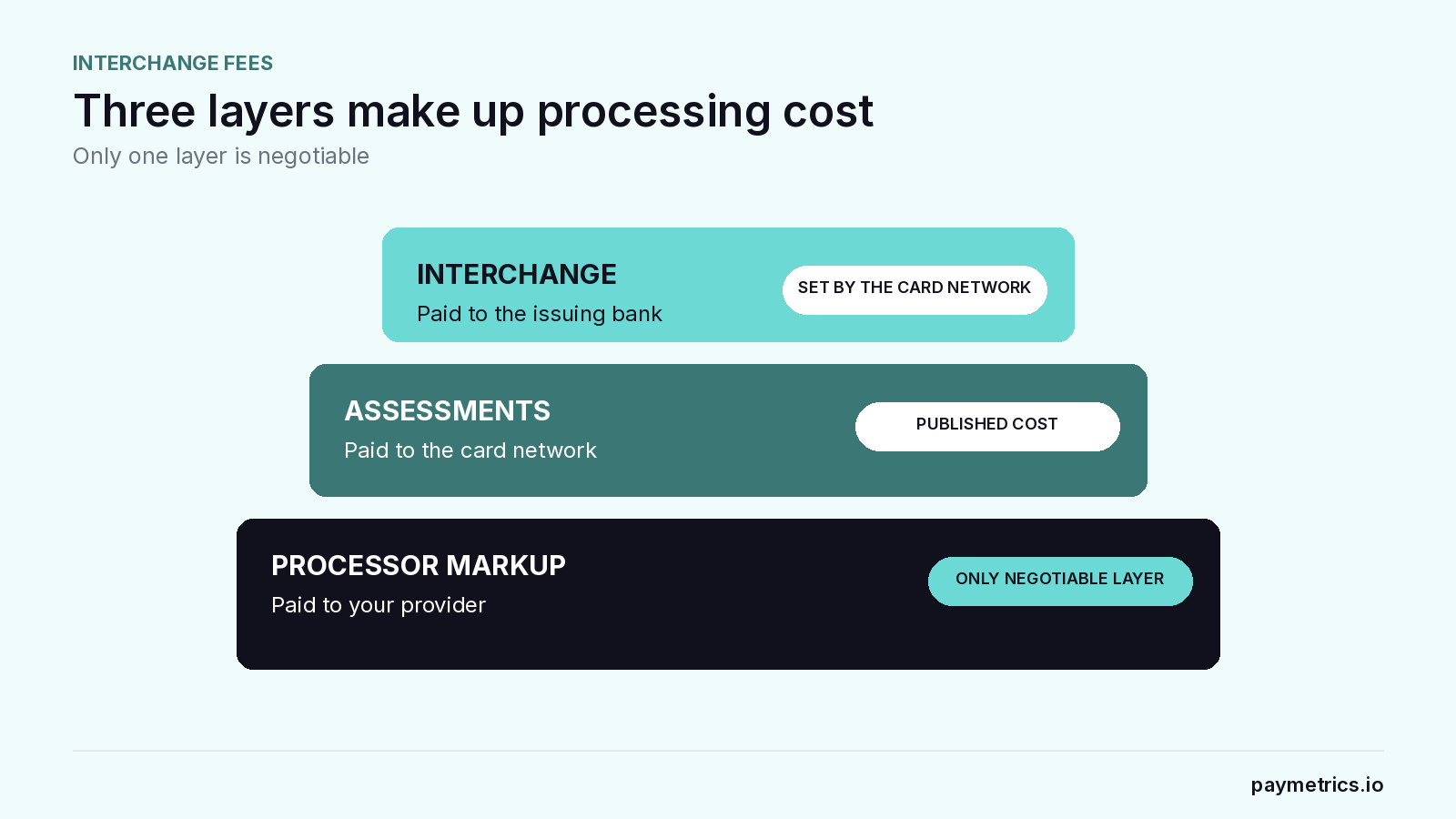
Interchange typically represents the largest share of the total. Our breakdown of how much are credit card processing fees shows how the 3 layers combine into an effective rate.
What 6 Factors Change Your Interchange Rate?
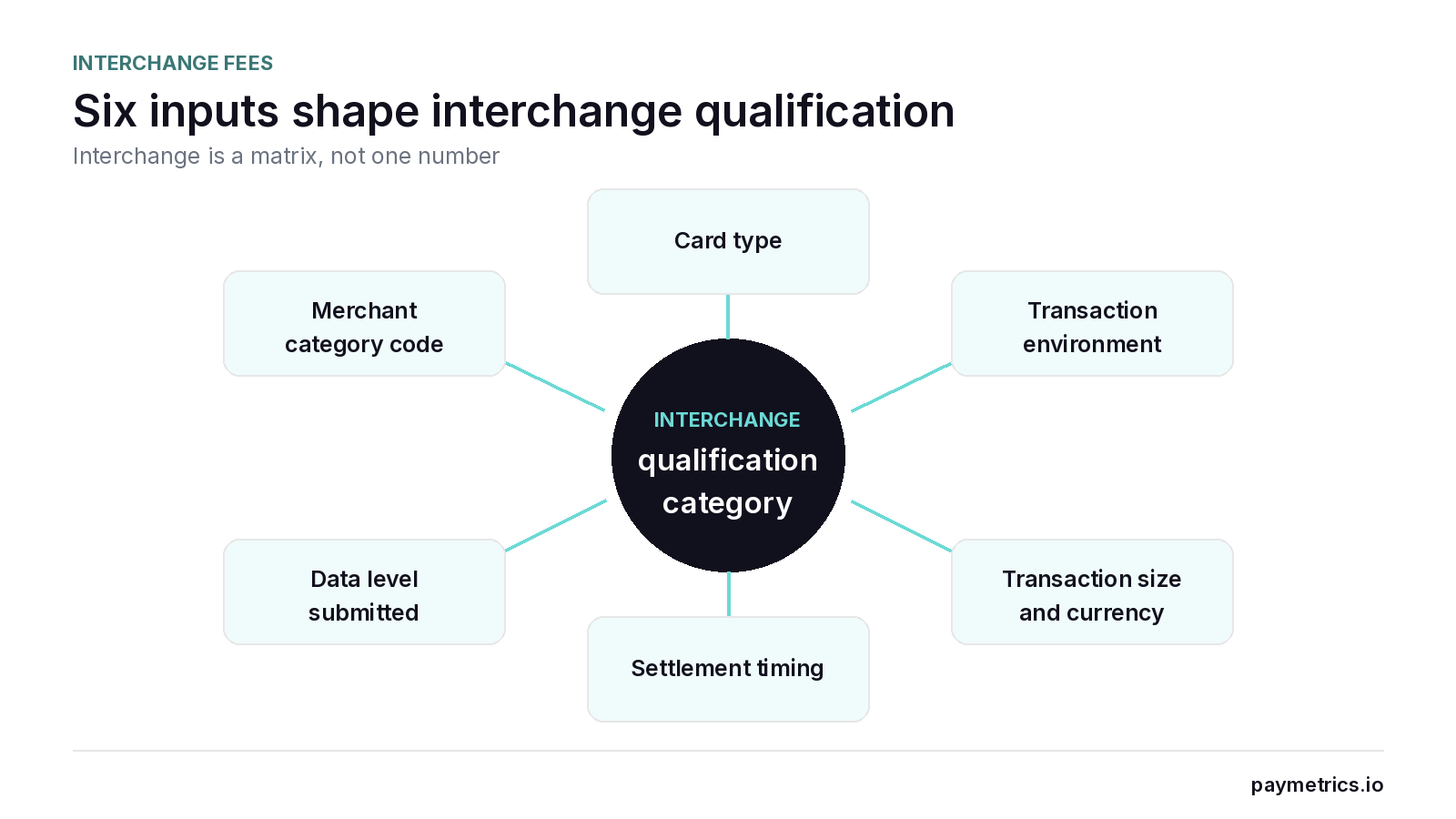
Interchange is not one number. It is a matrix of hundreds of categories driven by 6 variables.
- Card type, with rewards and corporate cards priced above standard debit.
- Transaction environment, comparing card-present swipes against keyed entries.
- Merchant category code assigned to your business.
- Data level submitted, where Level 2 and Level 3 data reduce the rate.
- Settlement timing, since late batches downgrade the category.
- Transaction size and currency.
How Does Level 3 Data Reduce Interchange?
Level 3 data passes line-item detail such as product codes, quantities, and tax amounts to the issuer. B2B and government transactions that include this detail qualify for reduced categories. Merchants selling to businesses should review what is Level 3 processing before renegotiating anything else.
How Do You Calculate What You Actually Pay?
Divide total monthly card fees by total monthly card volume to get your effective rate. That single number exposes markup that a quoted rate hides. The full method is in how to calculate credit card processing fees.
How Do Downgrades Raise Your Interchange Cost?
A downgrade happens when a transaction fails to meet the requirements of its target category and settles at a more expensive one instead. Four conditions trigger most downgrades.
- Keyed transactions entered without address verification data.
- Batches settled more than 24 hours after authorization.
- Corporate and purchasing cards submitted without Level 2 or Level 3 detail.
- Missing customer codes, tax amounts, or invoice numbers on B2B sales.
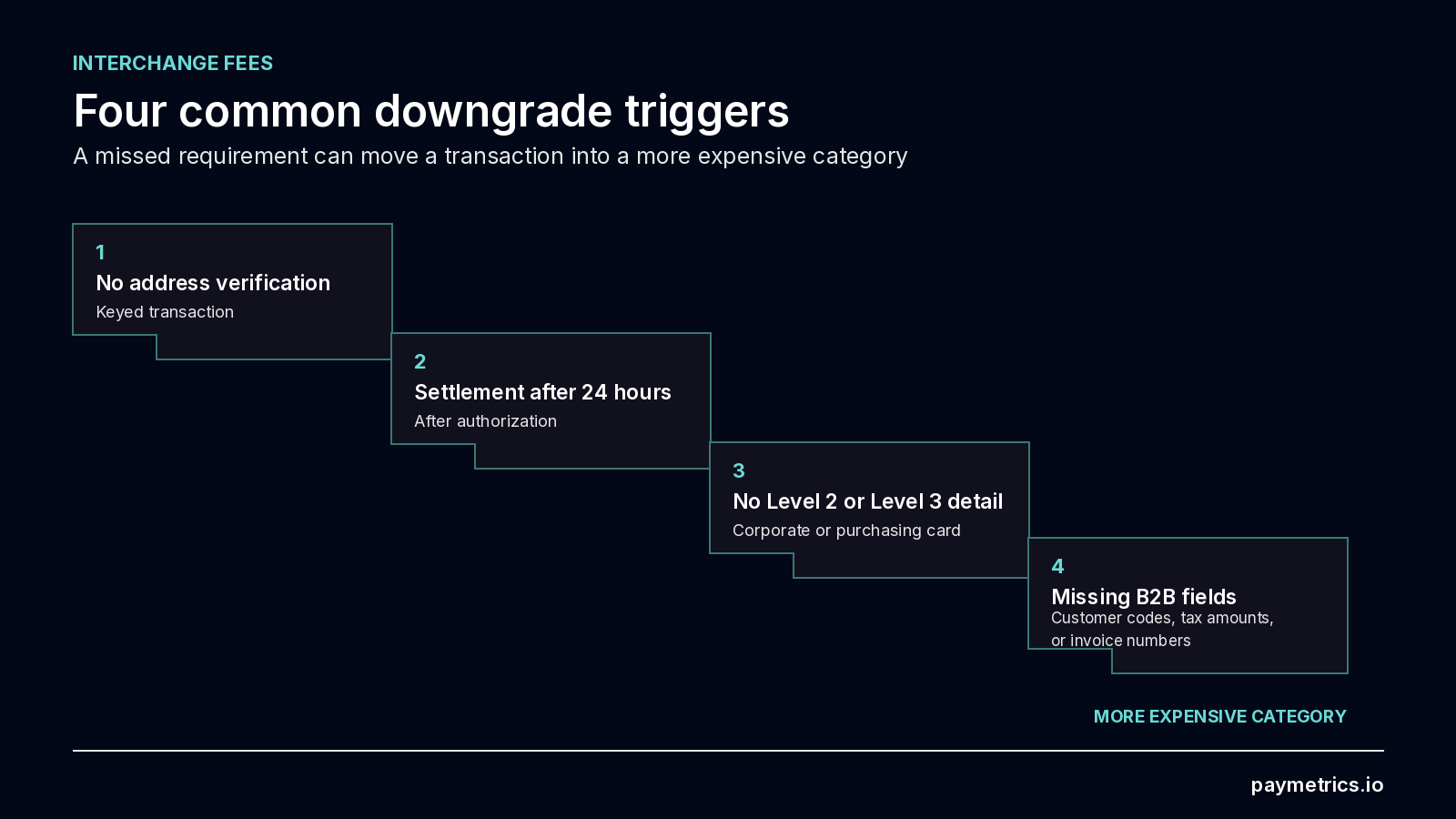
Downgrades appear on a statement as non-qualified or mid-qualified volume, and they are the single largest recoverable cost for merchants who accept business cards.
Where Interchange Fits in a Cost Reduction Plan
Interchange is fixed, so cost reduction work targets the other layers and the qualification categories. Payment integrations, gateway settings, and pricing models all move the effective rate without touching published schedules.
Merchants ready to act can start with our solutions overview and route from there into the processing setup that matches their transaction mix.
Frequently Asked Questions
Are interchange fees the same for debit and credit cards?
No. Regulated debit interchange is capped under federal rules and sits well below credit interchange. Rewards credit cards carry the highest rates because issuers fund cardholder rewards from that revenue.
How often do interchange rates change?
Card networks publish rate updates twice each year, in April and October. Merchants should review their effective rate after each update rather than assuming last year’s pricing still holds.
Why do rewards cards cost merchants more?
Issuers fund cardholder rewards from interchange revenue, so premium and rewards cards carry higher published rates. Merchants cannot decline a card by reward tier, which makes qualification and markup the only levers available.
Is interchange negotiable?
Interchange itself is not negotiable with any processor. Processor markup is negotiable, and interchange qualification improves with better data and faster settlement.
Table of Contents
Subscribe to our newsletter
Get the latest insights and updates delivered to your inbox.

How to Read a Merchant Statement: A Line-by-Line Analysis
Review a merchant statement line by line, calculate the effective rate, identify padded fees, and turn the findings into savings.
What Is a Payment Facilitator (PayFac)?
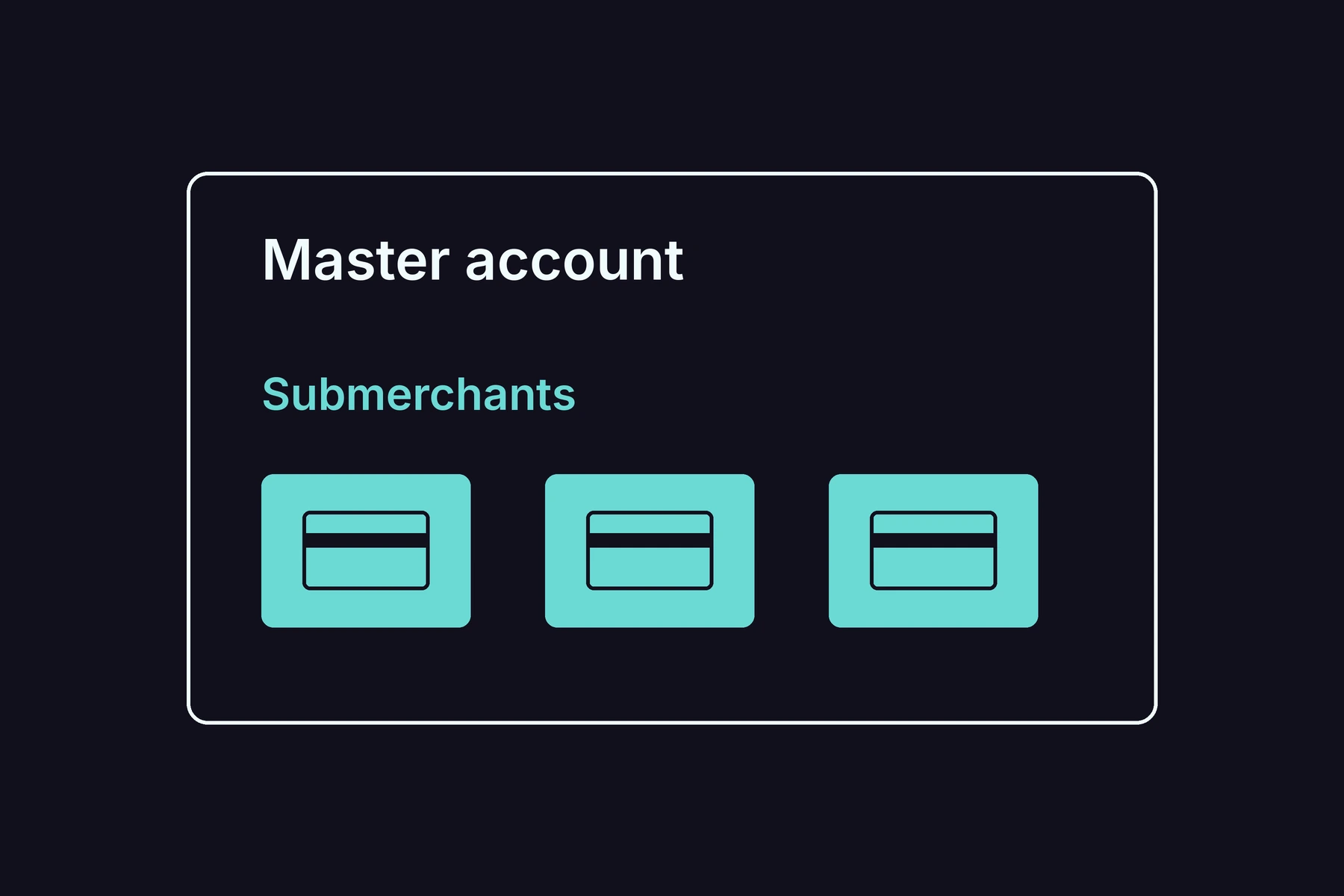
A payment facilitator, commonly shortened to PayFac, is a company that holds a master merchant account and onboards other businesses as submerchants underneath it.

How to Calculate Credit Card Processing Fees: The 3-Step Method We Use on Every Statement Audit
Calculate your effective processing rate in three steps, compare healthy ranges, and find hidden costs on merchant statements.